For investors looking at crypto UAE opportunities, the key question is no longer simply which coin to buy. It is whether you can access real infrastructure that converts capital into measurable hashrate, with power, cooling and operations managed well enough to protect returns.
The UAE has earned attention as a digital-asset hub, but mining is a different proposition from trading or holding tokens. ASIC hardware must run continuously, electricity costs must be understood before deployment, and every hour offline affects production. The strongest mining strategy starts with operational discipline, not market headlines.
Crypto UAE is bigger than exchanges and token trading
The UAE’s digital-asset economy includes exchanges, investment firms, blockchain businesses and data-centre infrastructure. For miners, that broader ecosystem matters because it creates demand for professional-grade operational partners rather than informal, self-managed setups.
Bitcoin mining remains an infrastructure business. A miner’s outcome is shaped by hashrate, network difficulty, BTC price, pool performance, electricity pricing, curtailment risk, cooling efficiency and machine uptime. Hardware is only one part of the equation. A high-performance ASIC placed in the wrong environment can lose much of its potential value through heat, delayed repairs or unreliable power.
This is where a managed approach can make commercial sense. Rather than sourcing machines from one party, arranging shipment with another, finding a site independently and chasing technical support when a unit fails, miners can use one accountable provider for the full operating chain. That reduces administrative burden and creates clearer responsibility when performance needs attention.
Why the UAE appeals to mining investors
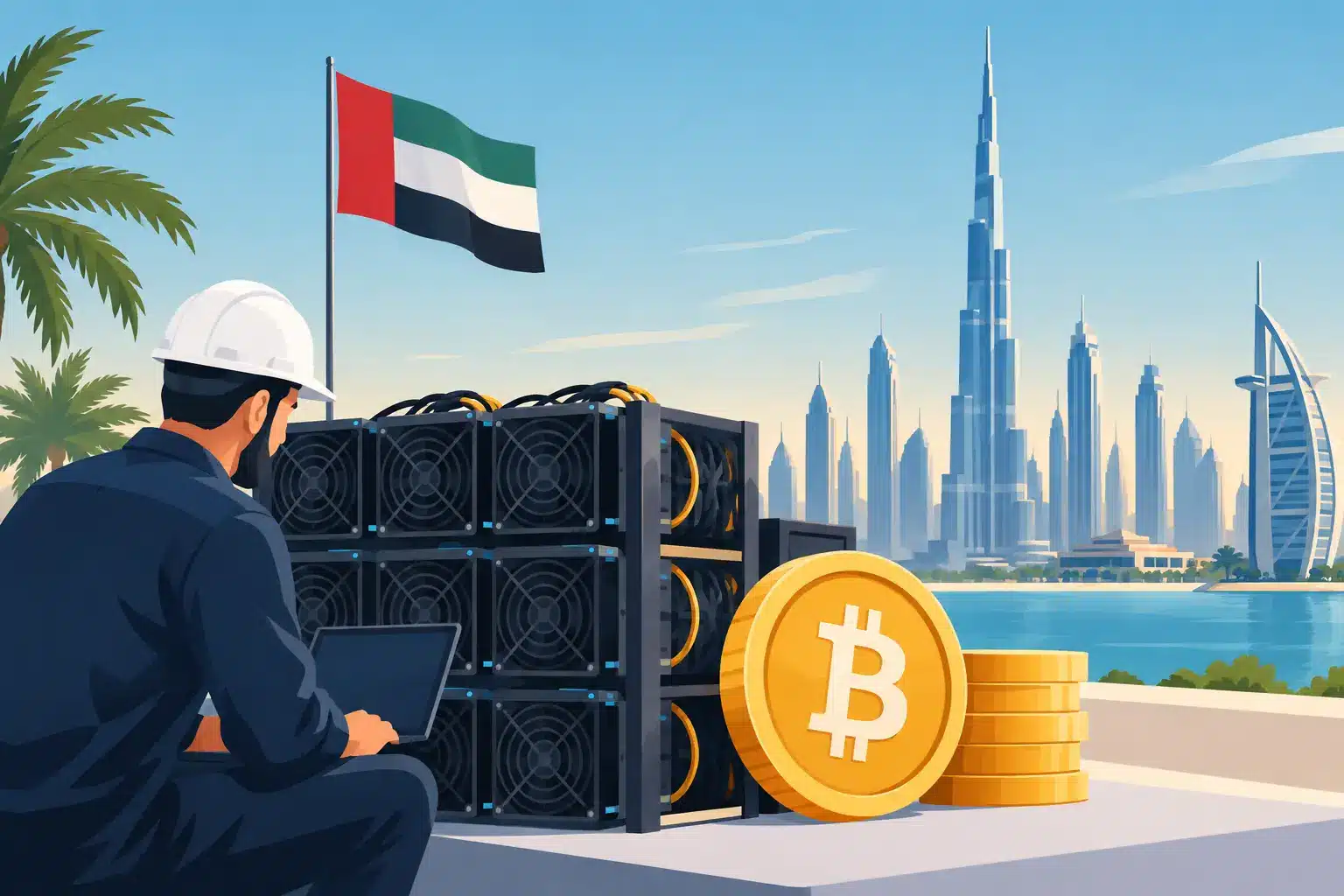
Dubai-based access, established logistics routes and a growing technology ecosystem make the UAE attractive to investors who want closer oversight than an entirely remote overseas deployment. It can be particularly useful for owners who want to inspect hardware, speak directly with technical teams and scale from a handful of units into a larger fleet.
The regional advantage is not a guarantee of the lowest possible electricity rate in every scenario. Large mining markets can offer different energy economics, particularly where stranded power, hydro generation or surplus capacity is available. The right choice depends on the total cost of ownership, not a headline kWh figure.
A cheaper power rate can become expensive if it comes with weak uptime, poor site security, slow spare-part availability or unclear billing. Conversely, a transparent hosting arrangement at a competitive rate may provide better economics when it keeps machines online and reduces unplanned operational costs. Miners should compare expected production after fees, not just advertised power prices.
For portfolios requiring geographical diversification, UAE infrastructure can also sit alongside capacity in the USA, Europe or South America. Spreading fleets across sites may reduce concentration risk, although it adds reporting and management complexity. The benefit depends on fleet size and an operator’s ability to maintain consistent monitoring across locations.
Start with the economics before buying an ASIC
The latest-generation ASIC is not automatically the best machine for every buyer. Newer models generally provide stronger efficiency, but their upfront price can be higher and availability can change quickly. A more established model may suit an investor with a tighter Capex budget, while a high-efficiency unit may be more suitable where electricity is a larger share of Opex.
Before committing to hardware, model the decision against realistic assumptions. Use the machine’s stated hashrate and power draw, then allow for pool fees, hosting charges, expected downtime, network difficulty changes and BTC price volatility. Avoid basing a purchase decision on a single optimistic daily revenue figure.
Three figures deserve particular scrutiny: joules per terahash, total all-in electricity cost and projected uptime. Efficiency indicates how much power is needed to produce hashrate. All-in electricity cost should show whether taxes, service fees or other charges are included. Uptime should be backed by operational processes, not vague assurances.
For a first-time miner, the most practical objective may be simplicity: select a proven ASIC and place it in fully managed hosting. A professional operator with 150 machines has different priorities. They may need dedicated capacity, negotiated power terms, firmware policy controls, reporting access, repair stock and an expansion path. The infrastructure should fit the investment plan rather than force the plan to fit a standard package.
The power price is only part of the calculation
A mining quote should make it easy to understand what is being paid for and how consumption is measured. Ask whether billing is based on actual metered usage, a fixed allocation or another model. Confirm the billing cycle, deposit requirements, payment currency and what happens if electricity prices move.
Where larger deployments are involved, power procurement structures such as a PPA may affect long-term predictability. That does not remove market risk, but it can give operators a clearer foundation for budgeting. Transparency matters more than artificially simple pricing.
Hosting turns hardware into an operating asset
Hosting is where the mining investment either becomes productive or becomes a support burden. A credible facility needs reliable electrical infrastructure, correctly designed distribution, ventilation or liquid-cooling capacity, network redundancy, physical security and staff able to respond when faults occur.
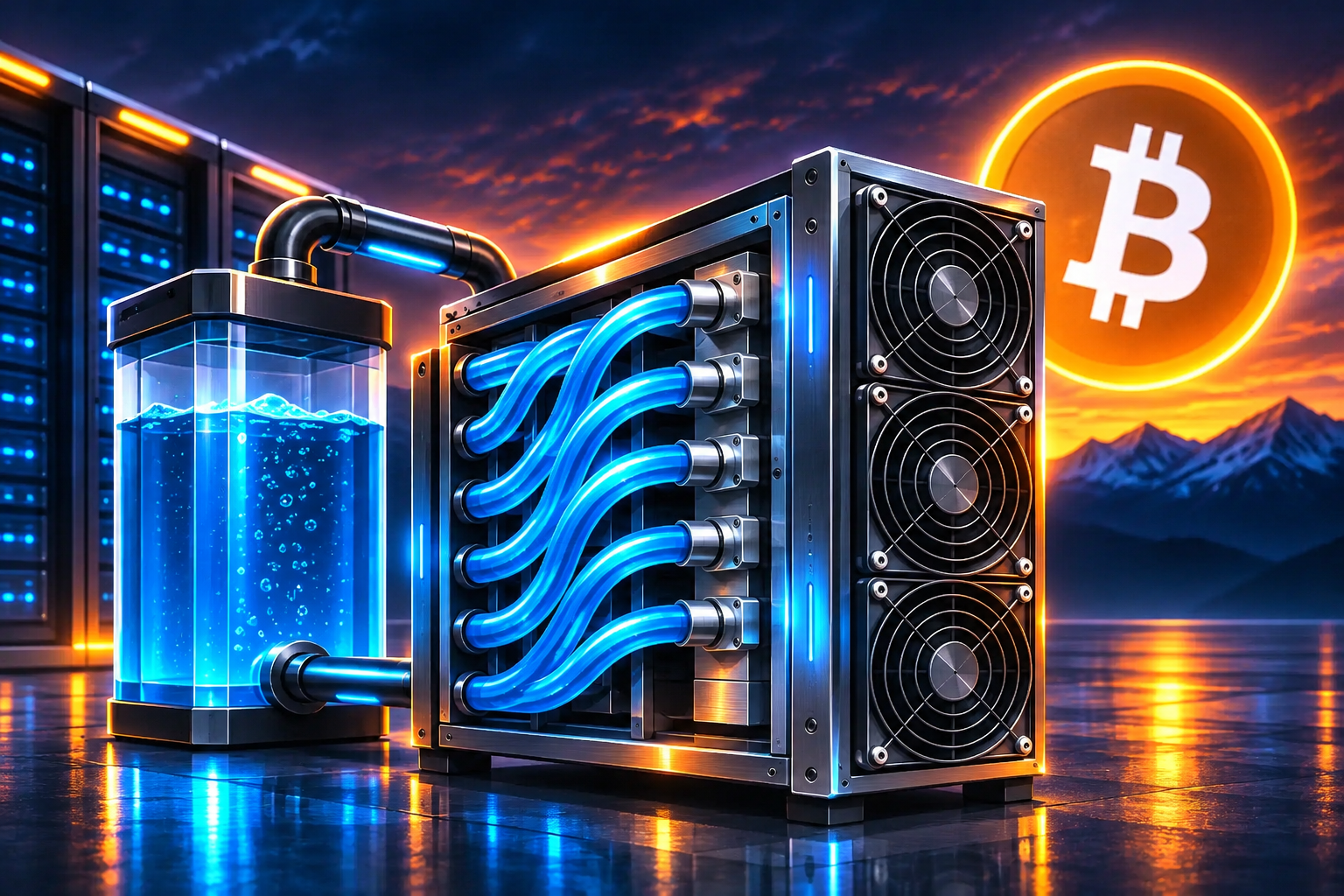
Air-cooled ASICs can perform well in professionally engineered environments, but heat management is never optional. Dust, poor airflow and high ambient temperatures can increase fan stress, reduce performance and shorten component life. Hydro-cooling can offer a route to higher-density deployments and more controlled thermal performance, although it requires specialised infrastructure and is not always the right choice for a small portfolio.
The practical test is how quickly an operator detects and resolves problems. Round-the-clock monitoring should identify hashboard errors, temperature issues, connectivity faults and unexpected hashrate drops early. Maintenance teams then need a process for diagnosis, repair approval, spare parts and redeployment. A dashboard is useful; a functioning operational response is what protects revenue.
Fast installation also matters. Hardware held in storage while a site is prepared is capital that is not producing. For buyers ready to deploy, a provider capable of taking payment-confirmed orders live quickly can materially reduce time between purchase and mining. BitHash supports this model with UAE-based infrastructure, managed deployment and operational support designed to take miners from procurement to active hashrate without unnecessary handovers.
Questions to ask before selecting a mining partner
The quality of a hosting provider is revealed by the details they are willing to put in writing. Ask how uptime is measured, whether planned maintenance is included, how outages are communicated and which party carries the cost of repairs. Request clarity on insurance, site access, machine ownership records and procedures for removing or relocating equipment.
You should also understand what level of miner-management software access is provided. Owners need a clear view of online units, hashboard status, power consumption, alerts and historical performance. For larger fleets, reporting should support financial reconciliation as well as technical oversight.
Security deserves equal attention. ASICs are valuable portable assets. The facility should have controlled access, monitoring, documented inventory handling and processes that make each machine traceable from arrival to deployment. The right setup should make a fleet easier to manage as it grows, not harder.
Do not treat repair as an afterthought. Boards, fans, power supplies and control components can fail. Ask where repairs are completed, what turnaround time is typical, whether spare units are available and whether repaired machines are tested before going back online. The cheapest hosting package may be poor value if minor faults keep machines idle for weeks.
A disciplined way to build a mining position
For new entrants, starting with a small number of machines can be sensible. It allows you to understand settlement cycles, monitor real operating data and assess the provider’s service before committing more capital. This is not a lack of ambition. It is a controlled way to validate assumptions.
For established miners, scaling should follow capacity planning. Confirm rack space, power allocation, cooling headroom, shipping schedules and maintenance capability before placing a large order. A 200-unit fleet needs more than 200 times the attention of a single machine. It needs processes, escalation paths and reporting that can withstand operational pressure.
Mining will always carry market and network risk. No hosting provider can guarantee profitability when Bitcoin price, difficulty and transaction-fee conditions move. What infrastructure can do is remove avoidable friction: delayed deployment, opaque power costs, preventable downtime and fragmented accountability.
The best crypto UAE mining decision is therefore not the loudest offer or the newest ASIC on a specification sheet. It is the deployment plan that gives your capital a clear route from purchase to productive, monitored hashrate – with the operational evidence to stay confident once the machines are running.
BitHash Editorial
Verified AnalystBitHash Infrastructure, UAE Colocation & Mining Intelligence Team