An ASIC can be profitable on paper and still underperform in the real world. The difference often comes down to where it runs, who maintains it, and how quickly faults are resolved. Hosted mining versus self mining is therefore not simply a question of convenience. It is a decision about control, operating risk, capital allocation and the level of mining exposure you actually want.
For a single miner, a few hours offline may feel manageable. For a fleet of 50, 150 or 1,000 machines, every percentage point of uptime, every kWh on the electricity bill and every delayed repair has a direct effect on returns. The right route depends on your available power, technical capability, portfolio size and appetite for day-to-day operational work.
Hosted mining versus self mining: the commercial choice
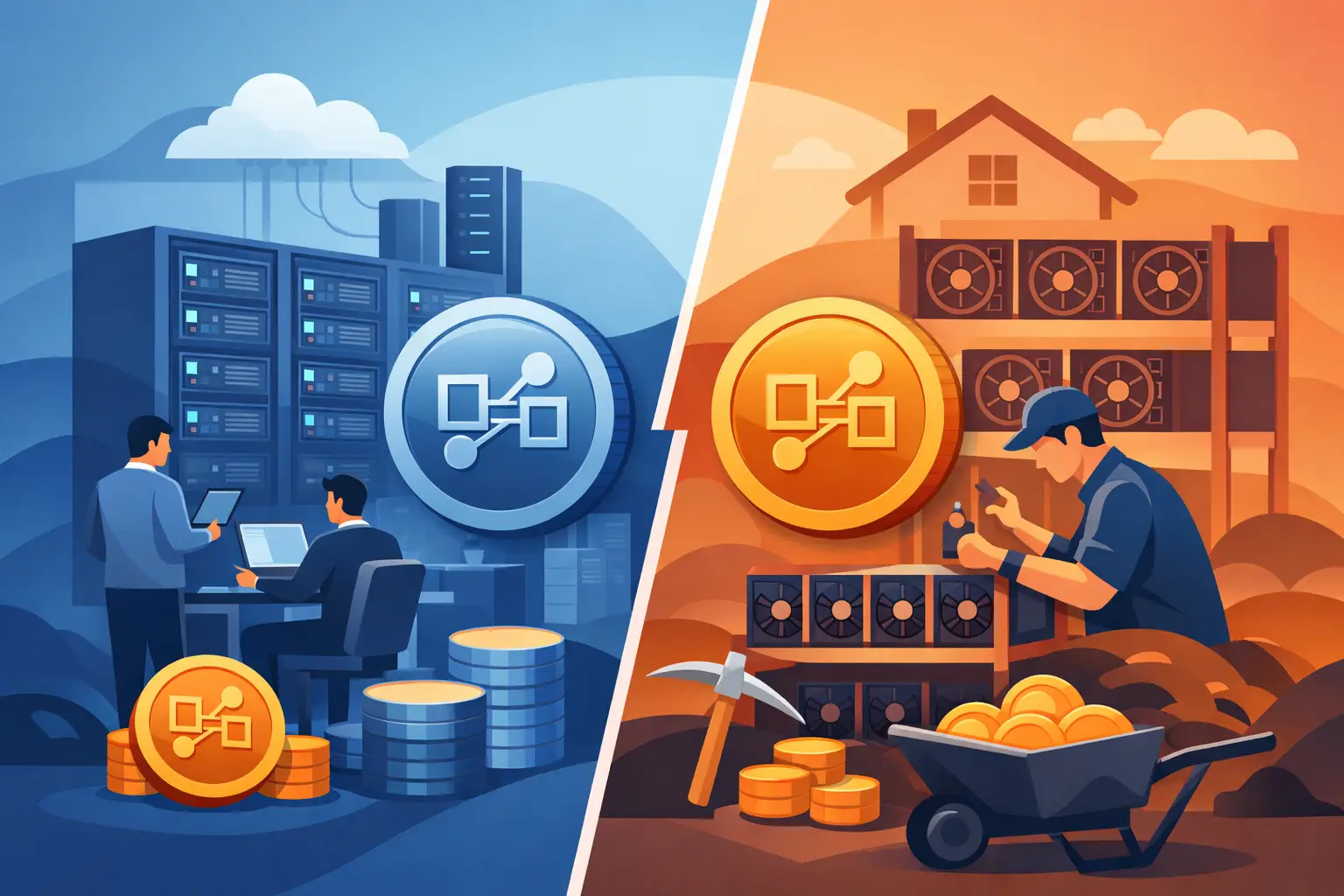
Self mining means you purchase ASICs and operate them in a location you control. That could be a warehouse, industrial unit, dedicated data centre or, in limited cases, a home setup. You arrange the site, electrical infrastructure, ventilation or hydro-cooling, networking, security, technicians, spare parts and monitoring.
Hosted mining means you own the machines while a specialist provider operates them at its facility. The provider typically manages installation, power delivery, cooling, security, network connectivity, monitoring and maintenance under an agreed hosting package. You retain ownership of the hardware and receive visibility over its hashrate and performance, without becoming the facilities operator.
Neither model is automatically superior. Self mining gives the greatest operational control, but requires the ability to use that control well. Hosting reduces the burden and can speed up deployment, but it requires careful provider selection and a clear understanding of the commercial terms.
Self mining: control comes with operational responsibility
The main appeal of self mining is straightforward: you control the asset and the site. You can decide how your machines are configured, select your own pool, set curtailment rules, negotiate directly with energy suppliers and build infrastructure around a long-term strategy. For experienced operators with access to competitively priced, stable power, this can be a compelling route.
It may also offer more flexibility around site design. A mature operator can choose containerised deployment, immersion or hydro-cooling, custom switchgear and a power purchase agreement that matches their expected load profile. If the operation is large enough, fixed infrastructure costs can be spread across a substantial number of miners.
The challenge is that ASIC mining is not plug-and-play at scale. Latest-generation machines draw significant power and produce substantial heat and noise. A site needs appropriately sized transformers, distribution boards, cabling, protection systems, exhaust capacity, filtration, network redundancy and physical security. Underestimating any one of these can create downtime, safety exposure or expensive rework.
Power pricing needs closer scrutiny than the headline kWh figure. Demand charges, minimum commitments, peak tariffs, connection fees, deposits, taxes and curtailment arrangements can change the effective cost materially. An apparently low tariff is less attractive if supply is unreliable or if the infrastructure cannot sustain full fleet load during high-temperature periods.
Maintenance is another hidden workload. Hashboards fail, fans degrade, power supplies need attention and firmware settings can affect efficiency. A miner that is offline for days because a replacement part is unavailable is not merely a technical inconvenience. It is an interruption to revenue. Self miners need either in-house technical staff or a dependable repair process, along with a practical stock of critical spares.
Self mining is usually best suited to operators who already have access to suitable industrial space and power, have a technically capable team, or are prepared to invest in dedicated mining infrastructure. It can be the right strategic move, but it is a facilities business as much as a Bitcoin mining business.
Hosted mining: convert operational complexity into a service
With hosted mining, the focus shifts from running a site to owning productive hashrate. Your ASICs are deployed in an established facility where the core operational layers are already in place: power distribution, cooling, security, network access, monitoring and on-site support.
This approach can reduce the time between buying hardware and generating hashrate. Rather than sourcing equipment, arranging transport, preparing a site and commissioning electrical works separately, miners can move through procurement, installation and activation in one managed process. That is especially valuable when new ASIC generations are in demand and early deployment matters to your return profile.
Hosting also makes it easier to build a portfolio without building an operations department. An investor with 10 machines may want exposure to mining economics, but not the responsibility of diagnosing fan faults at midnight. A professional operator may own hundreds of units yet choose hosting in a new region rather than commit capital to a site before proving the economics.
The financial trade-off is that you pay for the service. Hosting charges may be structured around electricity consumption, a fixed management fee, a bundled kWh rate or a combination of these. The right question is not whether hosting is cheaper in isolation. It is whether the total cost of hosted operation is lower, more predictable or more productive than building and running an equivalent site yourself.
A transparent package should make the commercial model clear. Ask how electricity is priced, whether there are minimum terms, how curtailment is handled, what repair work costs, and whether replacement parts are charged separately. You should also understand the process for machine relocation, shutdown and collection if your plans change.
Uptime is the metric that changes the comparison
Many mining decisions begin with hashrate and purchase price. They should also begin with uptime. A 200 TH/s miner does not deliver 200 TH/s of productive output if it spends extended periods waiting for installation, operating in poor thermal conditions or sitting offline after a fault.
Self mining gives you direct control over the variables that influence uptime, but it also gives you direct responsibility for all of them. A strong internal team can respond immediately. A weak site can turn small faults into prolonged outages.
A capable host spreads specialist staff, spare-part stock, monitoring systems and site infrastructure across many machines. That can improve response times and operating consistency. The provider must still prove it through clear reporting, physical access arrangements, defined support procedures and a realistic approach to repairs. Marketing claims are not a substitute for operational visibility.
For serious fleets, look for miner-level data rather than broad assurances. You should be able to review online status, hashrate, temperature trends, pool configuration and power-related performance. Regular reporting helps identify whether a variance is caused by the individual machine, the pool, firmware, cooling or the wider facility.
Compare total economics, not just the electricity rate
The cheapest advertised electricity rate does not always produce the best mining result. A proper comparison includes Capex, Opex, deployment time, uptime expectations and management time.
With self mining, Capex may include electrical upgrades, transformers, racks, cooling systems, network equipment, fire protection, security, site deposits and professional installation. These costs are often front-loaded and may be justified over several years, but they can weaken short-term cash flow. You also need to account for the value of capital tied up in infrastructure rather than in additional ASICs or other investments.
With hosting, the infrastructure cost is generally embedded in the operating model. This can preserve capital and offer a clearer route to scaling, although the ongoing rate may be higher than a well-negotiated direct power arrangement. For many miners, paying a known operating cost is preferable to funding a large build-out with uncertain timelines.
Run the numbers using conservative assumptions. Include network difficulty growth, Bitcoin price volatility, pool fees, expected downtime, repair allowance and the fact that an ASIC’s efficiency advantage changes as newer generations enter the market. Avoid basing a multi-year commitment on one unusually strong month of mining revenue.
How to decide which model fits your operation
Start with an honest assessment of your operational edge. If you have reliable, low-cost industrial power, an appropriate site, experienced technicians and the ability to fund infrastructure without stretching your balance sheet, self mining may create long-term value. It can be particularly effective for large fleets with a clear expansion plan.
If your priority is rapid activation, predictable oversight and fewer moving parts, hosted mining is often the more practical choice. It suits first-time ASIC owners, investors building a portfolio, businesses entering a new geography and established miners who prefer to deploy capital into machines rather than facilities.
The middle ground is increasingly common. An operator may self-host an established core fleet while using third-party hosting to test new markets, manage seasonal power constraints or deploy newly acquired machines quickly. This avoids treating the decision as permanent or binary.
Before committing, request a full operating view: the model and condition of the ASICs, expected deployment date, electricity pricing methodology, minimum contract term, repair policy, monitoring access, insurance position and exit process. A provider should be comfortable answering these questions directly. BitHash, for example, combines hardware sourcing with managed deployment and ongoing operational support, which can reduce handovers between multiple suppliers.
Choose the setup that gives your machines the best chance to run productively, not merely the setup with the lowest-looking headline rate. Productive hashrate, transparent costs and a plan for faults will serve your mining strategy far better than a cheap figure that cannot hold up under operating pressure.