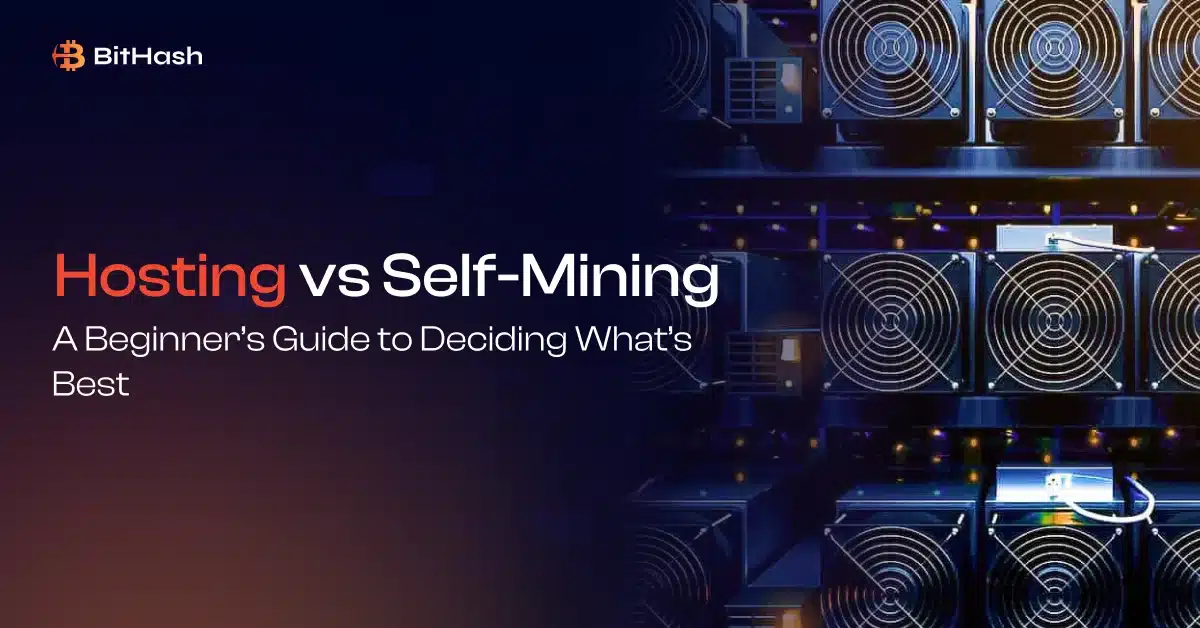
Cryptocurrency mining has become one of the most talked-about ways to participate in the blockchain economy. Whether you’re interested in bitcoin mining or exploring other coins, one of the first big decisions beginners face is whether to go for self-mining at home or choose a professional hosting solution. Both approaches have their advantages and drawbacks, and understanding them is key to building a profitable and sustainable mining operation.
For beginners, the choice often comes down to how much control they want over their mining hardware and mining rigs, versus how much convenience they prefer by outsourcing to a provider. Factors such as mining difficulty, rising electricity costs, and the need for consistent hash rate output make this decision even more critical. Some miners experiment with solo mining to gain independence, while others explore cloud mining services for a more straightforward entry into the industry.
In this beginner’s guide, we’ll break down the differences between hosting and self-mining, highlight the pros and cons of each, and help you decide which option is best for your goals.
What is Self-Mining?
Self-mining refers to setting up your own mining hardware, such as GPUs or ASIC hardware like the Antminer S19, at home or in a private space. In this model, you are responsible for every aspect of the operation: electricity consumption, cooling systems, maintenance, and security. Unlike hosted solutions in professional mining centers, self-mining gives you complete independence but also places the burden of costs and management squarely on your shoulders.
Self-mining connects directly to the blockchain network, where miners compete to solve complex mathematical problems using the proof-of-work consensus mechanism. Successful miners earn a block reward, which is the incentive for validating transactions. However, as the halving cycle reduces the block reward over time, profitability depends heavily on the electricity rate, hardware efficiency, and overall market conditions.
Advantages of Self-Mining
- Complete Control: You manage your mining rigs, settings, and mining pools without relying on third parties. This independence allows you to experiment with solo mining, different cryptocurrencies, and even alternative consensus models, such as proof of stake.
- Flexibility: Easy to test various configurations and adapt to changing market volatility. You can decide when to upgrade to newer ASIC hardware or switch strategies based on profitability.
- No Hosting or Contract Fees: Unlike hosted solutions, you avoid monthly contract fees or maintenance fees. This can be appealing for miners who want to minimize recurring expenses.
- Learning Opportunity: Managing your own setup helps you understand the technical side of bitcoin mining, from cooling systems to energy sources. Many miners share their experiences through platforms like Compass Mining or educational resources, such as the Learn podcast.
Disadvantages of Self-Mining
- High Electricity Costs: Residential electricity rates are often much higher than industrial rates offered by professional mining centers. This makes bitcoin mining at home less profitable, especially as mining difficulty increases.
- Noise & Heat: Powerful rigs like the Antminer S19 generate significant heat and noise, which can be disruptive in a household environment. Without industrial cooling, maintaining a stable hash rate output becomes challenging.
- Maintenance Burden: You are responsible for handling all repairs, upgrades, and troubleshooting on your own. Unlike hosted setups, where a maintenance fee covers support, self-mining requires technical expertise and constant attention.
- Limited Scalability: Expanding beyond a few rigs is difficult without professional infrastructure. Large-scale operations benefit from mining centers with optimized cooling and cheaper energy sources.
- Market Risks: Profitability depends on market conditions and market volatility. Sudden drops in coin prices or changes in the halving cycle can reduce returns.
- Resale Policy Concerns: Selling used ASIC hardware or rigs can be challenging, as resale values fluctuate with changes in bitcoin mining demand and hardware obsolescence.
Self-mining offers independence and control, but it also exposes you to higher electricity consumption, technical challenges, and financial risks. While you avoid contract fees and hosting charges, you must weigh these savings against the realities of market volatility, rising electricity rates, and the decreasing block reward. For beginners, self-mining can be a valuable way to learn how the decentralized network operates, but for long-term profitability, many miners eventually explore professional hosting or hybrid models.
What is Hosting?
Hosting involves placing your mining rigs in a professional data center or specialized mining centers designed for large‑scale cryptocurrency mining. Instead of running equipment at home, miners send their mining hardware, including GPUs and powerful ASIC miners, to facilities that provide optimized environments for crypto mining. These providers offer cheap electricity, advanced cooling systems, and round‑the‑clock monitoring to ensure maximum efficiency and uptime.
By outsourcing to hosting providers, miners can focus on strategy and profitability while experts handle the infrastructure. This model has become increasingly popular in bitcoin mining, where rising electricity costs and growing mining difficulty make home setups less practical.
Advantages of Hosting
- Lower Electricity Costs: Hosting providers often negotiate bulk energy rates, which are significantly cheaper than residential electricity. This reduction in electricity costs is one of the most significant advantages for bitcoin mining operations.
- Advanced Cooling Solutions: Industrial‑grade cooling systems keep your mining equipment running efficiently. Whether you’re using GPUs or an ASIC miner, proper cooling ensures stable performance and extends the lifespan of your hardware.
- Security & Reliability: Facilities are equipped with surveillance, restricted access, and backup power systems. This protects valuable mining hardware and ensures consistent hash rate output for your crypto mining operation.
- Scalability: Hosting makes it easy to expand your operation as your budget grows. Adding more mining rigs or upgrading to newer ASIC miners is straightforward in a professional environment.
- Professional Support: 24/7 monitoring and technical assistance reduce downtime. Hosting providers often have trained staff who can quickly repair or replace faulty mining equipment, keeping your cryptocurrency mining operation running smoothly.
Disadvantages of Hosting
- Monthly Fees: Hosting contracts add ongoing costs. These fees cover electricity, cooling, and maintenance, but they reduce short‑term profits compared to self‑mining.
- Less Direct Control: Providers manage the infrastructure, so you may have limited flexibility in configuring your mining rigs. Some miners prefer the independence of managing their own setups.
- Location Dependency: Since your mining equipment is stored remotely, physical access is restricted. You rely on the hosting provider’s policies and support team to handle issues, which may feel less hands‑on compared to managing your own crypto mining setup.
Hosting offers a professional, scalable, and cost‑effective way to run cryptocurrency mining operations. By leveraging bulk electricity rates, advanced cooling, and expert support, miners can maximize efficiency and profitability. While hosting does involve monthly fees and less direct control, it remains one of the most reliable solutions for those who want to grow their crypto mining business without the challenges of managing equipment at home.
Hosting vs Self-Mining: Quick Comparison
| Factor | Self-Mining | Hosting |
| Electricity Costs | High (residential rates) | Lower (bulk industrial rates) |
| Cooling | DIY fans/AC | Industrial-grade cooling |
| Security | Limited at home | 24/7 surveillance & insurance |
| Scalability | Hard to expand | Easy to scale |
| Maintenance | Self-managed | Professional support |
| Control | Full control | Shared with the provider |
| Hash Rate Stability | May fluctuate | Consistent due to an optimized environment |
Which Option is Best for Beginners?
For those just starting in crypto mining, the choice between self‑mining and professional hosting services can feel overwhelming. Self‑mining allows beginners to experiment with their own mining rigs, learn how transaction fees and mining rewards work, and gain hands‑on experience with the blockchain network. Many solo miners prefer this route because it gives them direct control over their mining hardware and the freedom to test different strategies.
However, while self‑mining is educational, it comes with challenges such as high electricity costs, noise, and limited scalability. Beginners often underestimate the importance of cooling infrastructure, ongoing maintenance, and the impact of fluctuating market conditions. Managing everything yourself means you’re responsible for repairs, upgrades, and even decisions regarding resale or purchase policy when hardware becomes outdated.
On the other hand, hosted mining through professional providers offers a smoother path to profitability. These facilities handle facility applications, provide industrial-grade cooling infrastructure, and offer support services that minimize downtime. Although you’ll pay a maintenance fee and possibly a contract fee, the benefits often outweigh the costs. Hosting reduces electricity expenses, ensures stable hash rate output, and protects valuable ASIC miners and other mining equipment with advanced security.
Another advantage of hosting is access to a hash power marketplace, where miners can buy or sell computing power to optimize returns. This flexibility enables beginners to scale their operations without incurring significant investments in new hardware. Hosting providers also streamline processes like purchase policy compliance and equipment management, making them ideal for those who want to focus on strategy rather than technical details.
In short, while solo miners may enjoy the independence of self‑mining, beginners aiming for long‑term profitability and growth will often find that professional hosting services or hosted mining solutions are the more intelligent choice. They provide stability, scalability, and expert support, ensuring that your journey into cryptocurrency mining is both profitable and sustainable.
Final Thoughts
In my view, the debate between hosting and self‑mining isn’t just about where you plug in your mining rigs; it’s about the kind of miner you want to become. Self-mining is a valuable starting point for beginners who want to understand the fundamentals of crypto mining, experiment with mining hardware, and experience firsthand how bitcoin mining interacts with the broader blockchain network. It teaches resilience, problem-solving, and the realities of managing costs, such as electricity and cooling.
But when the conversation shifts to long‑term profitability, scalability, and stability, hosting clearly stands out. Professional hosting services offer optimized cooling infrastructure, lower electricity rates, and round-the-clock monitoring that solo miners cannot match. In my opinion, hosting is the backbone of sustainable cryptocurrency mining; it transforms mining from a noisy, high‑maintenance hobby into a streamlined business model.
By outsourcing the heavy lifting to experts, you free yourself to focus on strategy, market timing, and growth. Hosting minimizes risks, maximizes uptime, and ensures your ASIC miners and other mining equipment deliver consistent performance. For anyone serious about building a profitable operation in a volatile market, hosting isn’t just an option; it’s the smarter path forward.