How Iran and Oil Markets Feed the Bitcoin Inflation Risk
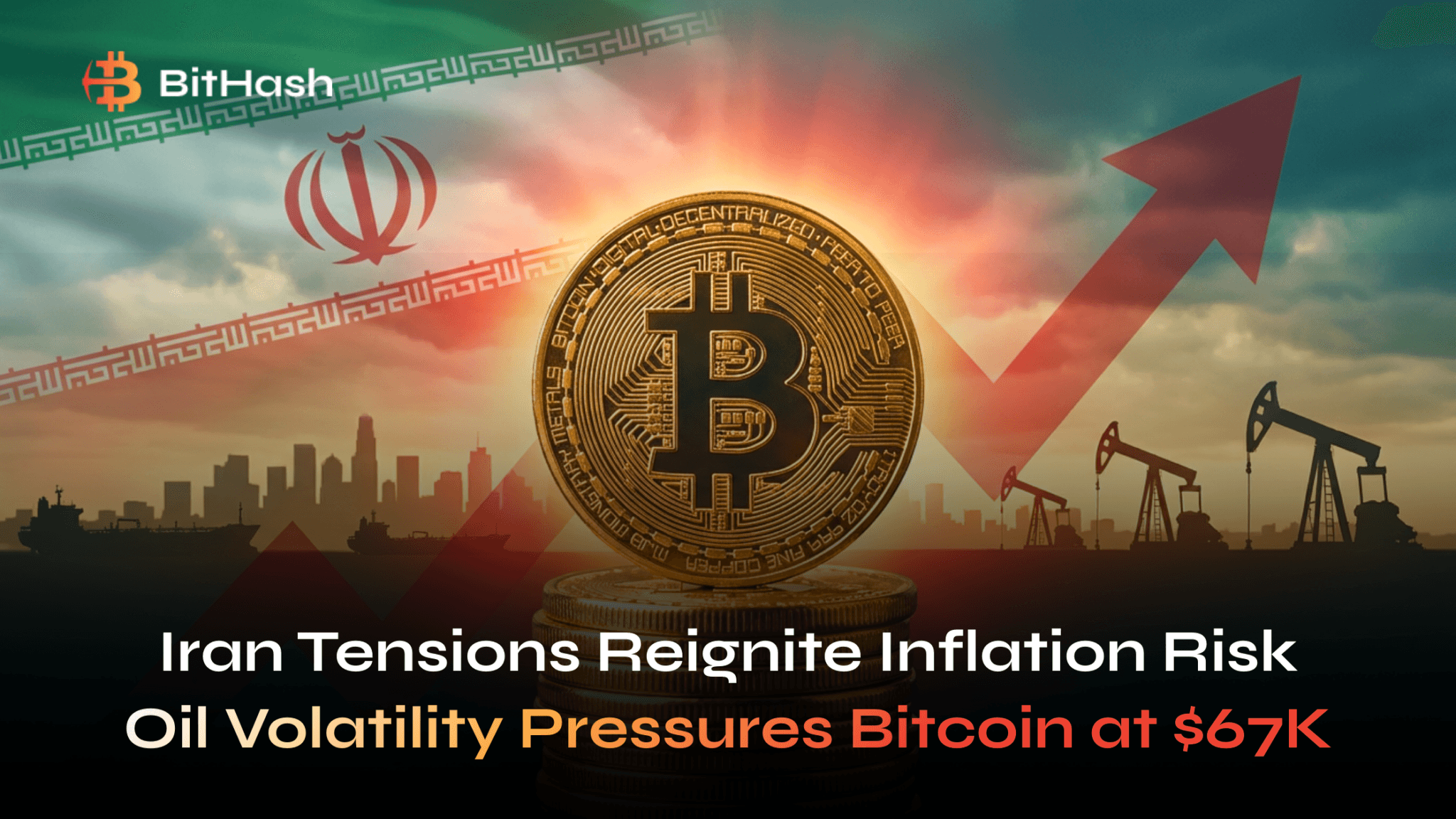
The Bitcoin inflation risk has returned to the spotlight as BTC stabilizes near $67,000 after a tense geopolitical weekend. Despite headlines around Iran and potential oil supply disruptions, Bitcoin avoided a deeper selloff and settled into a local range. However, investors are keeping a close eye on how the narrative around the Iran oil price shock could contribute to broader macro pressures, particularly amid the growing discourse about a potential 5% risk of U.S. inflation.
While coverage from LiveMint points out that Bitcoin demonstrated greater resilience than traditional markets, Reuters reports highlight mounting concerns over Middle East tensions and oil transportation routes. That relative strength does not eliminate the Bitcoin inflation risk, but it changes how traders interpret current price action.
What Happened Over the Weekend
Bitcoin went through volatility but avoided panic selling:
- BTC dipped on geopolitical headlines but quickly returned to the ~$67,000 zone and remained range-bound
- U.S. index futures moved lower, yet crypto price action was softer than many expected
- CME Bitcoin futures left a downside gap near $65,880, a level that traders are monitoring
This behavior reinforces the idea that BTC price $67K is currently acting as a psychological pivot. While equities reacted sharply, Bitcoin’s response was more contained, suggesting mixed investor positioning.
How Iran and Oil Markets Feed the Bitcoin Inflation Risk
The direct link between oil and crypto lies in inflation expectations. Iran has discussed potential moves around the Strait of Hormuz, a critical artery for global crude shipments. If tensions escalate, oil prices could spike quickly.
Analysts citing calculations from JPMorgan Chase warn that a sharp rise in crude could push inflation metrics back toward the 5 percent zone. This brings back the 5% inflation danger in the United States, which previously compelled the Federal Reserve to implement strong tightening.
Higher rates depleted market liquidity in 2023, when the CPI was near those levels. Risk assets had trouble. Because of this background, traders are reevaluating the geopolitical implications of Bitcoin as oil-related stories become more prominent.
In simple terms:
| Oil above $100 | Inflation expectations rise | Higher Bitcoin inflation risk |
| CPI near 5% | Hawkish Fed stance | Pressure on BTC price $67K |
| De-escalation | Risk appetite improves | Relief rally potential |
How Traders Are Reading the Setup
Market participants are closely watching technical signals.
- Michaël van de Poppe is monitoring the 21-day MA near $67,600; a break above may trigger upside momentum
- On the three-day chart, BTC appears stable after a false breakdown and returns to the range
- Upside targets are discussed around $73,000 to $74,000 if resistance clears
However, caution remains the base case. The presence of the CME gap near $65,880 leaves open the possibility of a short-term retest.
This is where Bitcoin and oil inflation risk intersect. If oil spikes and inflation expectations jump, downside pressure could intensify. If tensions cool, BTC may attempt a breakout.
What This Means for Bitcoin Now
The Bitcoin inflation risk depends on three drivers in the coming weeks:
- Oil’s reaction to Iran-related headlines
• CPI data and whether the U.S. inflation 5% risk becomes reality
• Federal Reserve rhetoric on rates and liquidity
As long as BTC hovers around the BTC price $67K zone and near its 21-day average, the market remains highly sensitive to macro shifts. A confirmed breakout above $68K could open the path toward $73K to $74K. A drop toward the CME gap may renew talk of a deeper correction.
Ultimately, this moment reflects the growing integration of crypto with global macro forces. The Bitcoin geopolitical impact is no longer theoretical. Oil, inflation, and central bank policy are once again central to Bitcoin’s direction.
BitHash Media Relations
For press inquiries, contact: info@bithash.ae