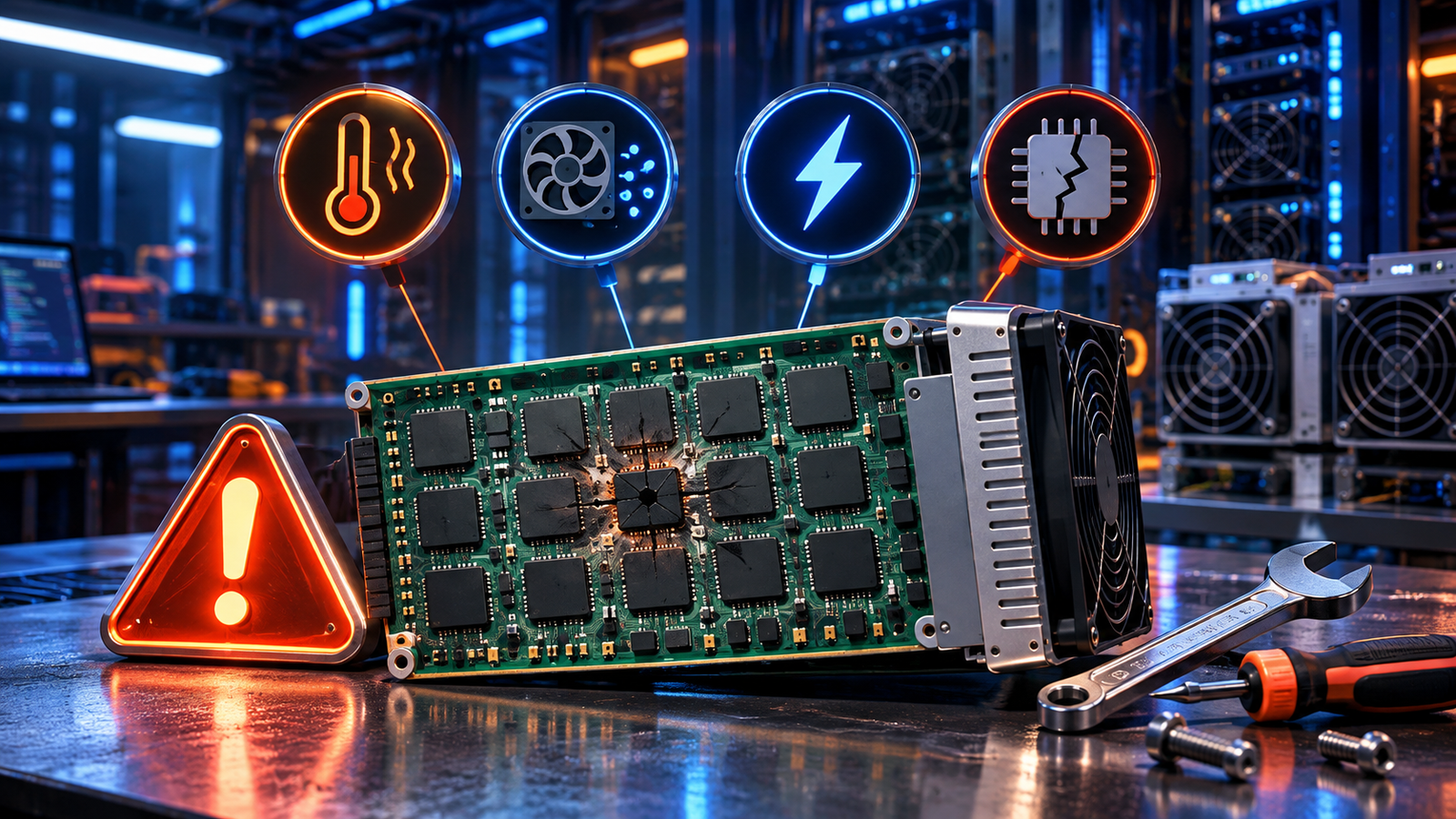
ASIC Miner Hosting UAE for Better Mining ROI

A miner that sits powered down is not an investment waiting patiently. It is an asset losing productive hours while network difficulty, market conditions and operating costs continue to move. That is why ASIC miner hosting UAE is about far more than finding rack space. The right hosting arrangement gives your hardware stable power, controlled cooling, physical security and the operational attention needed to keep hashrate online.
For an individual with a first ASIC or an operator deploying hundreds of units, the commercial objective is the same: convert installed hashrate into consistent mining output with as little avoidable downtime and administration as possible. The UAE can be a compelling base for that objective, but hosting quality, power terms and technical capability matter more than a headline price alone.
What ASIC Miner Hosting in the UAE Should Deliver
ASIC miners are specialised industrial machines. They draw significant power, generate intense heat and need a stable environment to run continuously. A hosting provider takes responsibility for the infrastructure around the machine: receiving it, racking it, supplying electricity, managing airflow or liquid cooling, monitoring performance and handling faults.
This removes the practical barriers of operating hardware at home or from a small commercial unit. Noise, heat rejection, electrical capacity, dust control and round-the-clock supervision quickly become difficult to manage outside a purpose-built site. Hosting lets an investor focus on fleet economics rather than facility operations.
A serious service should make the division of responsibility clear. You should know who owns the miner, how electricity is charged, what is included in the hosting fee, how downtime is reported, and which repair work requires approval. Transparency here protects both expected returns and the relationship when conditions are less favourable.
Power pricing is only part of the equation
The kWh price has a direct effect on profitability, so it deserves close attention. Yet the lowest quoted electricity rate is not automatically the lowest operating cost. A cheaper package can lose its advantage if it comes with poor uptime, unclear curtailment rules, delayed repairs or charges that only appear after deployment.
Ask for the full cost picture: electricity rate, hosting charge, deposit requirements, installation fees, pool configuration support, repair labour and any management platform charges. If a provider offers a fixed-price arrangement, establish what happens if market energy costs change. If pricing is indexed, understand the formula and how often it is adjusted.
For larger fleets, power procurement deserves its own conversation. A provider with the capacity to arrange energy at scale, including PPA-based structures where appropriate, can give an operation greater planning certainty than a standard retail-style hosting offer.
Uptime is a financial metric
A 200 TH/s miner cannot recover hours lost to weak site operations simply by existing in a rack. Every interruption reduces realised hashrate. Across a large fleet, small uptime differences can materially affect monthly results.
Look beyond broad claims. Ask how the site monitors miners, how quickly technicians can access a failed unit, whether spare parts are held locally and how incidents are logged. Good operators identify declining hashrate, abnormal temperatures, fan faults and network issues before they become prolonged outages.
Monitoring should also be visible to the customer. Miner-management software provides a practical view of hashrate, worker status, temperatures, uptime and earnings. It does not eliminate operational risk, but it means you are not relying on occasional updates when a machine underperforms.
Cooling Is Central to ASIC Miner Hosting UAE
The UAE climate makes thermal management a core infrastructure decision, not a cosmetic facility feature. ASICs produce substantial heat under continuous load. If that heat is not removed efficiently, machines can throttle, suffer increased component stress or shut down to protect themselves.
Air-cooled hosting can work well when a site is engineered for sufficient airflow, filtration and heat extraction. The quality of the design matters: hot and cold air must be managed properly, intake air needs protection from dust, and fans must not be pushed beyond sensible operating conditions.
Hydro-cooling is increasingly relevant for high-density, latest-generation hardware and industrial fleets. It can support tighter deployment, more controlled temperatures and potentially lower fan-related wear. It also requires specialist infrastructure, competent water treatment and a team that understands the operational demands of liquid-cooled miners. It is not automatically the right choice for every portfolio, particularly where the machine model or fleet size does not justify the additional capital and operational complexity.
The practical question is not whether one method sounds more advanced. It is whether the hosting environment is designed around your miner model, expected load and scaling plan.
Choosing a Hosting Package That Fits Your Fleet
The right package depends on how much operational control you need and how quickly you intend to expand. A new miner may value a plug-and-mine service where the provider sources the ASIC, ships it, installs it and configures the pool. A professional operator may already own equipment and require clear fleet reporting, negotiated power capacity and technical access to a dedicated deployment area.
Before committing hardware, establish these operational points:
- The exact ASIC models accepted, their power requirements and the cooling method used.
- The quoted kWh price, all recurring and one-off charges, plus the contract term.
- Expected deployment timing after payment, delivery and technical checks.
- Monitoring access, maintenance process and authorisation rules for repairs.
- Security controls, insurance responsibilities and procedures for collecting or relocating hardware.
For portfolios of 150 units or more, capacity planning is especially important. A host may have space available today but insufficient power allocation for your next phase. Confirm whether capacity is reserved, how expansion is priced and what lead time applies. A facility partner should help you plan Capex and Opex around growth rather than force a costly reconfiguration later.
Do Not Treat Hardware and Hosting as Separate Decisions
Mining economics begin with the ASIC itself. Hashrate, efficiency measured in joules per terahash, purchase price, warranty position and expected service life all influence the hosting decision. An older unit bought cheaply may appear attractive, but its higher power draw can make it less competitive once electricity and maintenance are included.
This is where an end-to-end provider can reduce friction. BitHash can source current-generation ASIC hardware and place it into managed hosting, helping align the machine specification with the intended operating environment. It also creates a clearer route for repairs and after-sales support because the procurement and deployment teams understand the asset from day one.
Still, no provider can promise a fixed mining return. Bitcoin price, network difficulty, transaction fees, pool performance and energy costs can change quickly. Hosting improves operational control; it does not remove market exposure. Investors should model conservative, base and optimistic cases before committing capital, then review realised results against those assumptions each month.
Questions That Expose a Provider’s Real Capability
A well-run hosting operation should answer practical questions directly. How is power redundancy managed? What happens when a miner stops hashing at 2am? How are damaged hashboards diagnosed? Is the quoted rate exclusive of VAT or other charges? Can you inspect the facility or receive documented evidence of your equipment’s deployment?
Pay attention to the quality of the answer, not just the sales message. Specific explanations of site processes, escalation times, maintenance approvals and reporting are more valuable than broad promises of high performance. The same applies to deployment claims. Going live within 24 hours of payment confirmation can be a major advantage when capacity and hardware are ready, but it should be supported by a defined onboarding process rather than treated as a vague aspiration.
Physical security matters too. Your ASICs are high-value, portable assets. Controlled access, surveillance, inventory records and clear serial-number tracking should be standard. For international owners, documented chain of custody from arrival to installation provides extra reassurance.
Build for Productive Hashrate, Not Just Cheap Space
Hosting is often presented as a simple cost line. In practice, it is the operating foundation beneath your mining strategy. Reliable power, disciplined cooling, fast technical response and clear data can protect more value than a marginally cheaper rate with uncertain service.
The strongest ASIC miner hosting UAE arrangement is one that matches your equipment, risk tolerance and growth plan, while giving you a clear view of every operational cost. Choose a partner that treats uptime as a shared commercial priority, and your fleet has a far better chance of doing the job it was bought to do: mine consistently, securely and at scale.
Written by BitHash
BitHash Infrastructure & Mining Research Team