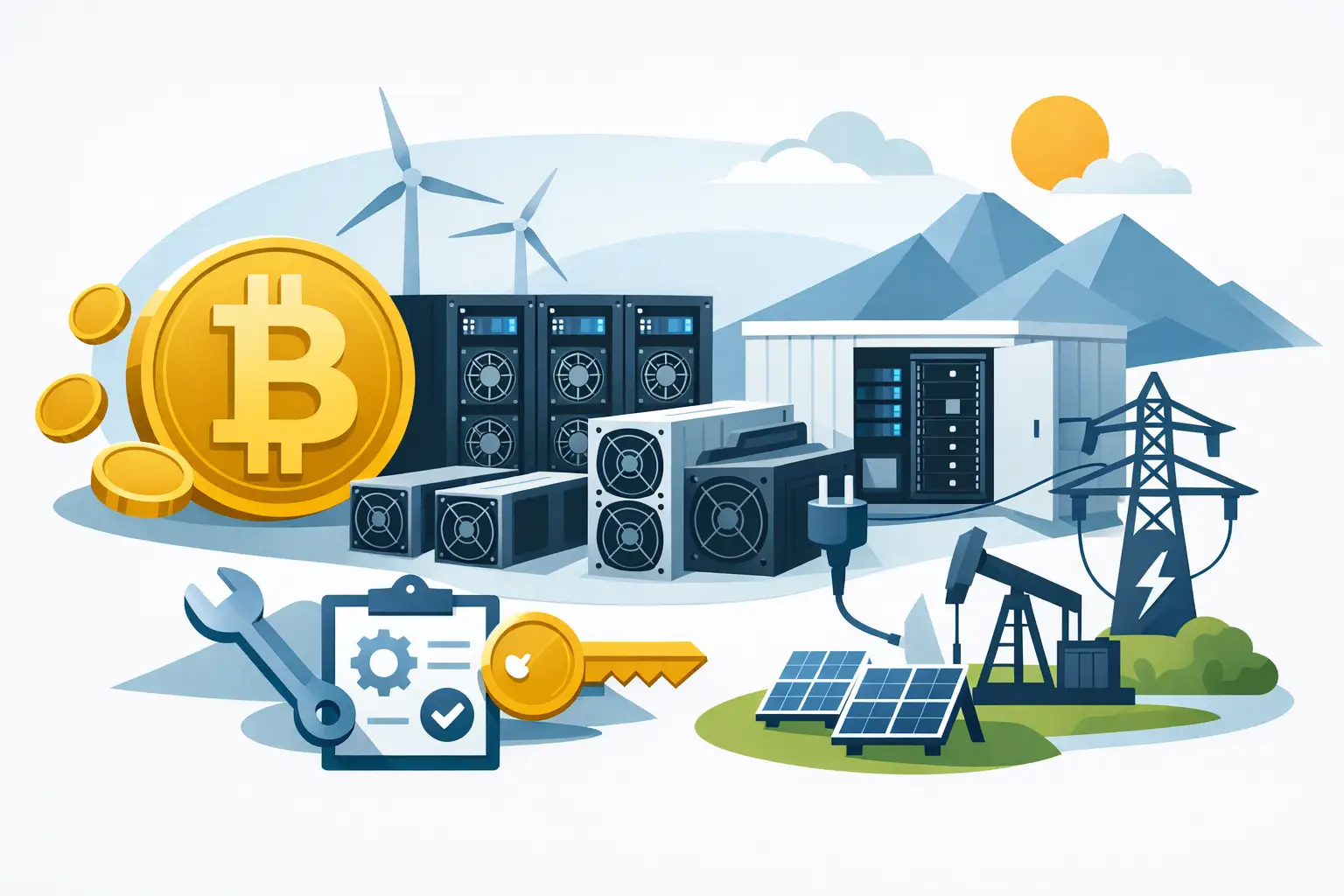
A new ASIC can be delivered quickly. Making it earn consistently is the harder part. A bitcoin mining turnkey solution brings together the work that sits between purchasing hardware and receiving mining output: equipment selection, shipping, rack deployment, power, cooling, monitoring, maintenance and operational reporting. For an investor, it turns a collection of machines into an operating mining asset rather than a technical project that demands daily attention.
That distinction matters when margins are shaped by far more than a miner’s advertised hashrate. Electricity cost, curtailment terms, heat management, pool configuration, downtime, repair lead times and facility security can all affect realised performance. A turnkey model does not remove market risk, but it gives miners a clearer structure for managing operational risk.
What a bitcoin mining turnkey solution should include
A genuine turnkey offer is not simply an ASIC sale with a hosting quote attached. It should create a single accountable operating path from procurement through to live mining. The provider may own the facility, manage a partner site, or build dedicated infrastructure, but responsibility should be clear at every stage.
ASIC sourcing matched to the operating plan
Hardware selection starts with the economics, not the newest model on a product list. A high-efficiency ASIC may offer better joules per terahash, but its purchase price can increase capital expenditure and extend the payback period. An older unit may be cheaper to acquire, yet become vulnerable when network difficulty rises or power costs increase.
The right choice depends on the available kWh rate, planned holding period, cooling design and appetite for upfront Capex. For a small portfolio, consistency and straightforward maintenance may be more valuable than chasing maximum nameplate hashrate. For a fleet operator, a homogeneous batch of miners can simplify spares, firmware management and performance analysis.
A turnkey provider should confirm machine condition, specifications, warranty position and expected delivery timeline before payment. It should also be able to advise whether air-cooled or hydro-cooled equipment is the better fit for the intended site. Hydro cooling can support high-density deployments and tighter thermal control, but it requires compatible hardware, specialist infrastructure and a more considered maintenance plan.
Logistics, installation and commissioning
Mining hardware has little value while it is in transit, waiting for customs clearance or sitting uninstalled. The operational handover should cover transport coordination, secure receiving, serial-number checks, racking, network connection and pool configuration.
Commissioning is where a provider proves that a machine is not merely powered on, but properly working. Each unit should be tested for stable hashrate, expected power draw, temperature behaviour and connection to the chosen mining pool. The operator should then have access to a dashboard or miner-management software showing individual machine status, production data and fault alerts.
Fast deployment is valuable, particularly when the hardware market moves quickly. It should never mean skipping acceptance testing. A miner that goes live within 24 hours of payment confirmation is a strong operational outcome only if capacity is confirmed, the equipment has been checked and the commercial terms are understood.
Power, cooling and facility discipline
Electricity is usually the defining operating cost in Bitcoin mining. A clear hosting package should state the electricity rate, what is included in that rate, billing frequency, minimum commitments and any conditions that can change the price. Where power is secured through a PPA or other supply agreement, miners should understand the duration and structure of that arrangement rather than treating a headline kWh figure as permanent.
Cooling is equally commercial. High inlet temperatures, dust, poor airflow and overloaded electrical systems can reduce performance, trigger shutdowns and shorten component life. A capable hosting site manages airflow, filtration, power distribution and thermal load as a connected system. In high-density or hot-climate operations, hydro-cooling can be a practical route to stable performance, provided the facility is designed to support it.
Security should also be operational, not decorative. Controlled site access, 24/7 surveillance, asset records and documented handling procedures help protect equipment worth far more than its physical size suggests. For overseas owners, these controls provide essential reassurance when they cannot inspect every rack themselves.
The service layer that protects uptime
A mining fleet does not stay efficient because it was installed correctly once. Fans fail, hashboards degrade, power supplies trip and firmware can create inconsistencies across a batch. The difference between a basic hosting arrangement and a properly managed operation is the response when those issues appear.
Continuous monitoring should identify offline units, low hashrate, unusual temperatures and power anomalies early. However, alerts alone do not protect returns. There needs to be a defined workflow for diagnosis, customer approval where required, repair, replacement parts and redeployment.
Before signing, ask how faults are categorised and how quickly they are handled. Is there an on-site technician? Are common spares held locally? Does the operator provide repair reports? Is the machine returned to service after testing? These details determine whether a fleet experiences short, manageable interruptions or a growing number of inactive units.
For larger portfolios, reporting should extend beyond a dashboard. Operators need a regular view of active hashrate versus installed hashrate, uptime, power consumption, repair status, BTC production and hosting charges. This makes it easier to identify underperforming machines, compare sites and decide when to expand, relocate or retire a generation of hardware.
Turnkey mining is not the same as guaranteed profitability
A well-run facility can improve availability and remove friction, but no provider can guarantee mining profitability. Bitcoin price, network difficulty, transaction-fee conditions, pool luck, machine efficiency and energy costs all change. Responsible turnkey planning makes these variables visible rather than hiding them behind an optimistic daily revenue estimate.
Run scenarios before committing capital. Model a lower Bitcoin price, higher difficulty, a period of downtime and potential repair costs. Check whether the expected output still supports the investment case. Investors should also separate hardware value from operating revenue: an ASIC is a productive asset, but its resale value may fall quickly when new generations reach the market.
This is why transparent commercial terms matter. A low advertised power price can be less attractive if there are unclear management fees, long lock-ins, restrictive exit rules or limited support when equipment fails. The best structure is not always the cheapest line item. It is the one that gives the miner confidence in total Opex, service accountability and the ability to make informed decisions.
Choosing the right model for your scale
A first-time miner may need a fully managed route: assistance choosing one or several ASICs, hosted deployment, pool setup and a simple monitoring view. The objective is zero unnecessary hassle, with enough visibility to understand how the investment is performing.
A professional operator may need something different. A fleet of 150 or more machines can require staged procurement, dedicated capacity, custom electrical design, spares planning, API-level reporting and an agreed escalation process. At that scale, the provider is part of the operating model, not just a place to put machines.
Institutional or corporate buyers may need a dedicated data-centre project. That involves site assessment, utility planning, transformers, switchgear, racking, network architecture, cooling strategy, security and maintenance staffing. It demands careful planning, but gives the owner greater control over capacity and long-term infrastructure choices.
BitHash approaches these models as an end-to-end infrastructure commitment, supporting hardware acquisition, hosting, monitoring, maintenance and scalable facility development from a UAE-based operational base.
Questions to settle before you commit
A productive conversation with a provider should produce specific answers, not broad assurances. Confirm the all-in electricity and hosting cost, expected deployment date, uptime measurement method, monitoring access and process for failed hardware. Ask who owns the machines, where they are physically located, how they are labelled and what happens if you decide to move or sell them.
Also establish the financial workflow. Know when invoices are issued, which currency or payment method applies, whether a deposit is required and how energy consumption is measured. For larger deployments, request a service-level framework that defines responsibilities on both sides.
The right turnkey arrangement makes mining easier to operate without making it opaque. Choose a partner that can explain the technical detail plainly, show you the operational data and remain accountable after the miners have gone live. That is how a mining portfolio stays focused on hashrate and returns rather than preventable interruptions.