
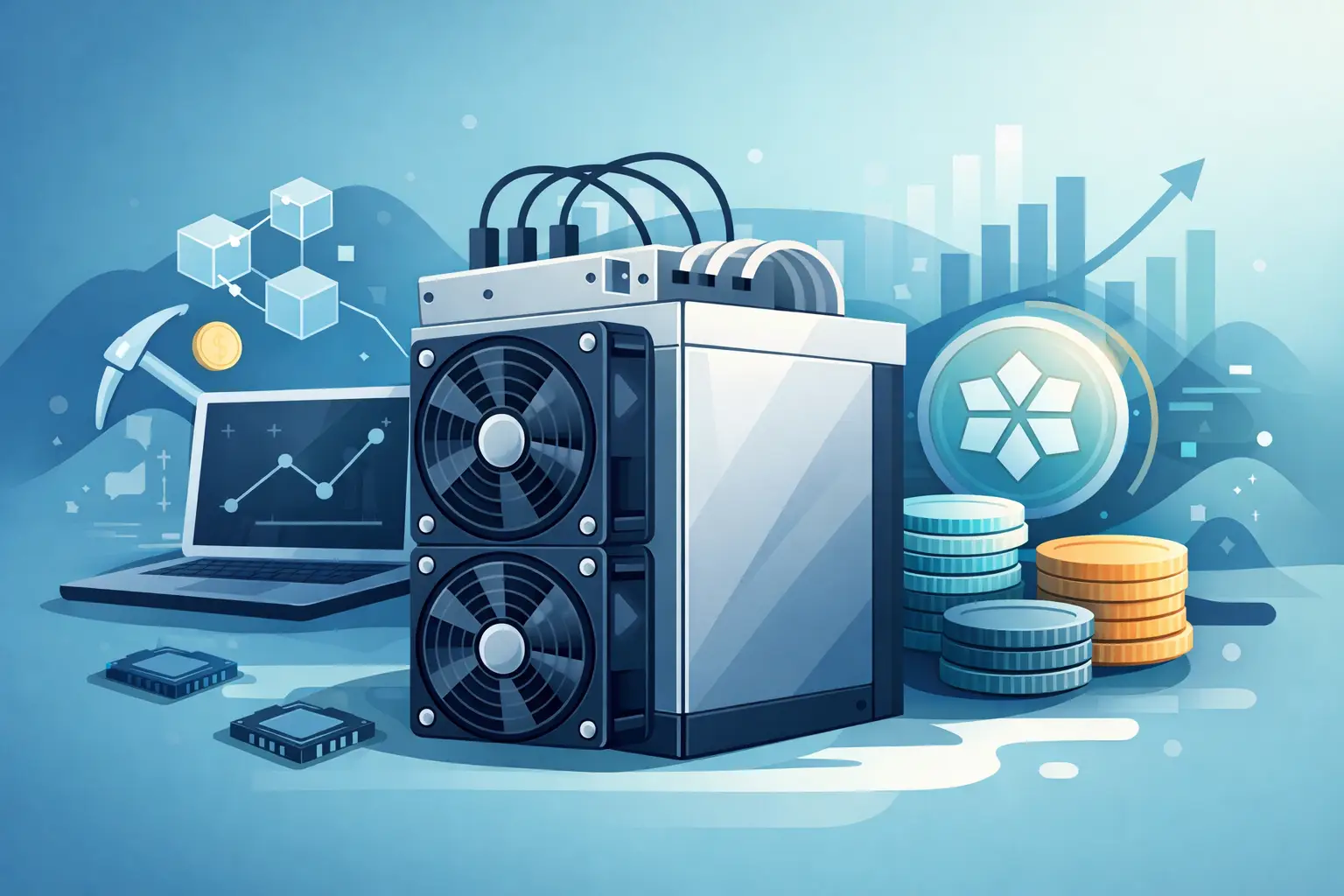
A Kaspa ASIC miner can turn a well-planned power contract and a disciplined operating setup into direct exposure to the Kaspa network. It can also become an expensive lesson in power pricing, heat management and timing if the machine is bought on headline hashrate alone.
Kaspa mining moves quickly. Network difficulty, coin price, machine availability and electricity costs all affect returns, sometimes within days. The right purchase decision starts with the miner, but it ends with the infrastructure behind it: reliable power, appropriate cooling, active monitoring and a clear plan for maintenance.
What makes a Kaspa ASIC miner different?
Kaspa uses the kHeavyHash algorithm. A Kaspa ASIC miner is purpose-built to process that algorithm efficiently, unlike a general graphics card setup or an ASIC designed for Bitcoin’s SHA-256 algorithm. That specialisation is the point: ASICs deliver substantially higher hashrate per unit of power than earlier GPU mining approaches.
The trade-off is flexibility. A Bitcoin miner can generally mine any SHA-256 compatible coin, while a kHeavyHash machine has a narrower operational role. Its value depends heavily on Kaspa’s mining economics and on demand for compatible hardware. This does not make it a poor choice, but it does mean the purchase should be treated as infrastructure Capex rather than a simple speculative purchase.
For operators, the practical question is not just, “What hashrate does this model produce?” It is, “What does each terahash cost to run, cool and keep online over its useful life?”
The numbers that matter before you buy
Manufacturer specifications are the starting point, not the investment case. Compare machines using the full operating picture.
Hashrate measures the volume of kHeavyHash calculations the machine can perform. Higher hashrate can increase the share of network rewards, but only when the additional machine price and electricity use remain justified. A unit that looks cheaper per terahash may have lower efficiency, creating a larger Opex burden every hour it operates.
Power consumption is equally important. It is normally quoted in watts, but your monthly cost is determined in kilowatt-hours. A 3,000W miner running continuously consumes 72 kWh per day before allowing for any facility overhead. Multiply that by your all-in kWh rate, not just a headline energy tariff, to understand the actual cost of keeping the unit online.
Efficiency links these two figures. It is often expressed as joules per gigahash, with a lower figure indicating less energy used for each unit of work. During strong market conditions, less efficient miners can remain profitable. When difficulty rises or the Kaspa price falls, efficient hardware usually has more room to keep running.
You should also review the purchase price, expected delivery date, warranty terms, power supply requirements, noise output and physical dimensions. These details affect deployment more than many first-time buyers expect. A machine that is profitable on paper but delayed for weeks or incompatible with the intended rack, power distribution or cooling design is not producing returns.
Build a conservative operating model
A useful model should test more than one outcome. Start with current network difficulty, expected hashrate, pool fees, electricity cost and an assumed uptime percentage. Then apply less favourable scenarios: higher difficulty, lower coin price and a period of reduced availability while a repair is completed.
Avoid treating online profitability calculators as a forecast. They are snapshots based on inputs that change constantly. Their best use is comparison: assess two miner models under the same electricity rate and assumptions, then identify which one has the stronger margin.
For larger orders, include logistics, import requirements, installation, hosting fees and reserve parts in the model. These costs are often small relative to fleet revenue over time, yet they can materially change payback expectations during the first months of operation.
Cooling is part of Kaspa mining economics
A Kaspa ASIC miner turns electrical energy into computation and heat. The heat does not disappear because the machine is in a professional facility. It must be extracted continuously, particularly in high-ambient-temperature regions where poor airflow can rapidly reduce reliability.
Air-cooled units suit many deployments when the building has sufficient ventilation, correctly sized extraction, clean intake air and rack spacing that prevents hot-air recirculation. They are generally easier to service, but fans, filters and airflow design need regular attention. Dust buildup and sustained high inlet temperatures can lead to throttling, component wear and avoidable downtime.
Hydro-cooled mining can offer greater density and more controlled thermal performance for suitable fleets. It is not automatically the right answer for every portfolio. It requires compatible hardware, properly engineered loops, pumps, heat exchange and ongoing water-quality management. For a high-density operation or a purpose-built data centre, the additional infrastructure can be justified. For a small portfolio, a well-designed air-cooled hosting environment may be the more efficient route.
Noise deserves a place in the decision too. ASICs are not domestic appliances. Operating a high-performance miner at home can create unacceptable heat, sound and electrical-load issues. Managed hosting removes that burden and places the unit in an environment built for continuous operation.
Why hosting quality can outweigh a small hardware discount
Two identical miners can produce very different outcomes when one is installed in a facility with unstable power, slow repairs and limited monitoring. Uptime is a revenue variable. Every hour offline is an hour in which fixed costs, opportunity cost and changing network conditions continue without the machine earning.
A capable hosting provider should make the commercial terms clear. Ask how electricity is priced, whether the quoted rate includes facility charges, how billing is measured, what maintenance is included and what happens when a unit develops a fault. Request clarity on deployment timelines, security, remote monitoring and the process for approving and completing repairs.
For serious operators, miner-management software matters as much as a dashboard that displays hashrate. You need prompt alerts for offline units, temperature exceptions, rejected shares and pool connectivity issues. Fleet visibility supports faster decisions: rebooting a machine, changing a pool configuration, isolating a fault or arranging a board-level repair before a minor issue becomes extended downtime.
BitHash can support this full operating chain, from sourcing current-generation ASIC hardware through to installation, monitored hosting, maintenance and scalable data-centre infrastructure. That single accountable setup is particularly valuable when an investor wants mining exposure without building an in-house technical and facilities team.
Choosing between immediate deployment and lower entry cost
The lowest advertised machine price is not always the best deal. Older stock may cost less because it has weaker efficiency, a shorter warranty window or a longer route to deployment. A newer model may require more upfront capital but generate stronger operating margins and retain more value if network conditions tighten.
Immediate availability also has value. If a machine can be powered and producing within 24 hours of payment confirmation, the buyer begins participating in current mining conditions without the uncertainty of a long shipping window. However, fast deployment should never replace basic checks on the miner’s condition, warranty, electrical compatibility and hosting readiness.
It depends on your objective. An investor building a first position may prefer a smaller number of efficient machines in managed hosting, with transparent monthly costs and minimal operational workload. A fleet operator with negotiated power rates may accept a broader mix of models, use hydro-cooling where appropriate and retain spare units or parts to protect uptime.
Questions to ask before committing capital
Before placing an order, confirm the exact hashrate and power specification, whether the unit is new or pre-owned, the warranty coverage and the anticipated go-live date. Establish the all-in electricity price and whether any management, maintenance or pool-related fees apply. You should also know who owns the hardware, where it will be installed, how you can monitor it and how quickly faults are diagnosed and repaired.
Ask for a realistic uptime assumption rather than a perfect one. No industrial operation runs without interruptions forever. The objective is a facility with disciplined monitoring, preventive maintenance and a fast response when problems occur.
Finally, decide what would make you switch a machine off. Setting a profitability threshold before market conditions become difficult is more rational than making the decision under pressure. It gives you a defined rule for preserving capital, reassessing power costs or redeploying equipment.
Kaspa mining rewards operators who treat every miner as part of a managed system, not as a box with an attractive hashrate figure. Choose the hardware carefully, secure dependable infrastructure, and make uptime and energy efficiency the numbers you watch most closely.