Iran BitBank Sanctions: Why the US Took Action
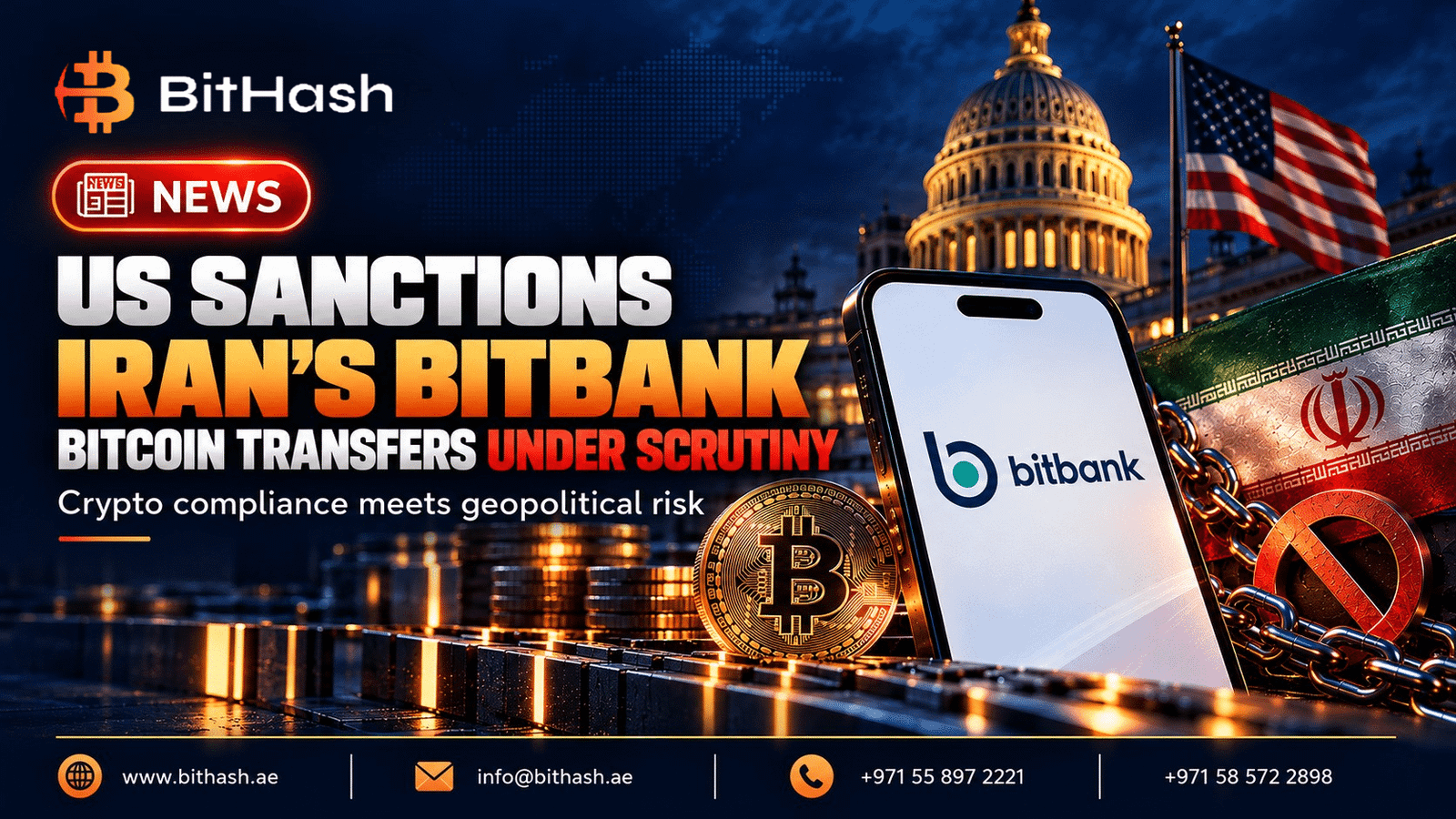
The Iran BitBank Sanctions case has put Bitcoin transfers and international politics back in the spotlight. On September 17, 2026, the US Treasury Department announced sanctions against Iranian crypto exchange BitBank accusing it of helping move hundreds of millions of dollars in Bitcoin to Iran’s Islamic Revolutionary Guard Corps (IRGC). The action also targeted the exchange’s software developer and three associates of Iranian financier Babak Zanjani.
Iran BitBank Sanctions: Why the US Took Action
The US Treasury’s Office of Foreign Assets Control (OFAC) said BitBank was part of a wider network used to move money connected to Iran’s government. Treasury alleged that Zanjani used the exchange between June and July 2026 to transfer hundreds of millions of dollars in Bitcoin to the IRGC. The department also named Pishtaz Simorgh Electronic Trade Company, which developed BitBank’s digital asset software. Three Zanjani associates were included in the sanctions announcement. These measures form part of US sanctions enforcement efforts against Iran under Operation Economic Outcast. The campaign aims to restrict financial networks that Washington says help the Iranian regime bypass economic restrictions.
BitBank Bitcoin Transfers and the Strait of Hormuz
One major part of the case involves Hormuz Safe Marine Services Authority. According to Treasury, the organization used BitBank from June 2026 to transfer payments it received to the Iranian regime. Hormuz Safe was linked to a scheme involving payments from ships passing through the Strait of Hormuz a critical route for global oil shipments. Treasury alleged that Bitcoin and other digital assets helped move these payments despite US sanctions. The allegations highlight how cryptocurrency can be used to move funds across borders, but they also show why authorities are paying closer attention to exchanges, wallets and companies that process digital asset transactions.
Iran BitBank Sanctions: What the Case Means for Crypto
The latest Iran crypto sanctions action follows earlier US measures against other Iranian exchanges and digital asset businesses, including Nobitex, Shelbit, Aban Tether, Zedcex, and Zedxion. Authorities have increasingly focused on the financial networks behind crypto transactions not just individual wallets.
Key points to know:
- BitBank Bitcoin transfers: Treasury alleges that hundreds of millions of dollars in Bitcoin moved through the exchange to the IRGC.
- Bitcoin sanctions evasion: US authorities say digital assets can help sanctioned networks move money outside traditional banking channels.
- Crypto exchange compliance: Platforms may face legal and financial risks if they process transactions involving sanctioned parties.
- International payments: The case connects digital assets with maritime activity and payments linked to a major shipping route.
- OFAC enforcement: The agency can block property under US jurisdiction and restrict transactions involving designated parties.
What Could Happen Next?
| Key Detail | Reported Information |
| Sanctioned exchange | BitBank |
| Announced by | US Treasury’s OFAC |
| Announcement date | September 17, 2026 |
| Main allegation | Bitcoin transfers linked to the IRGC |
| Related maritime organization | Hormuz Safe Marine Services Authority |
| Wider campaign | Operation Economic Outcast |
The Iran BitBank Sanctions case does not mean Bitcoin itself has been sanctioned. Instead, the action targets named entities and individuals accused of supporting Iran linked financial activity. The legal restrictions apply according to the relevant sanctions rules and jurisdiction.
Conclusion
The BitBank case shows that crypto compliance has become an important part of international sanctions enforcement. Bitcoin can move across borders quickly but exchanges and other financial services may still face restrictions when transactions involve sanctioned entities. For the wider market, the key issue is how regulators will continue tracking digital asset activity connected to sensitive industries and geopolitical disputes. The allegations against BitBank underline a clear point: crypto transactions are not automatically beyond the reach of financial authorities.
BitHash Media Relations
For press inquiries, contact: info@bithash.ae