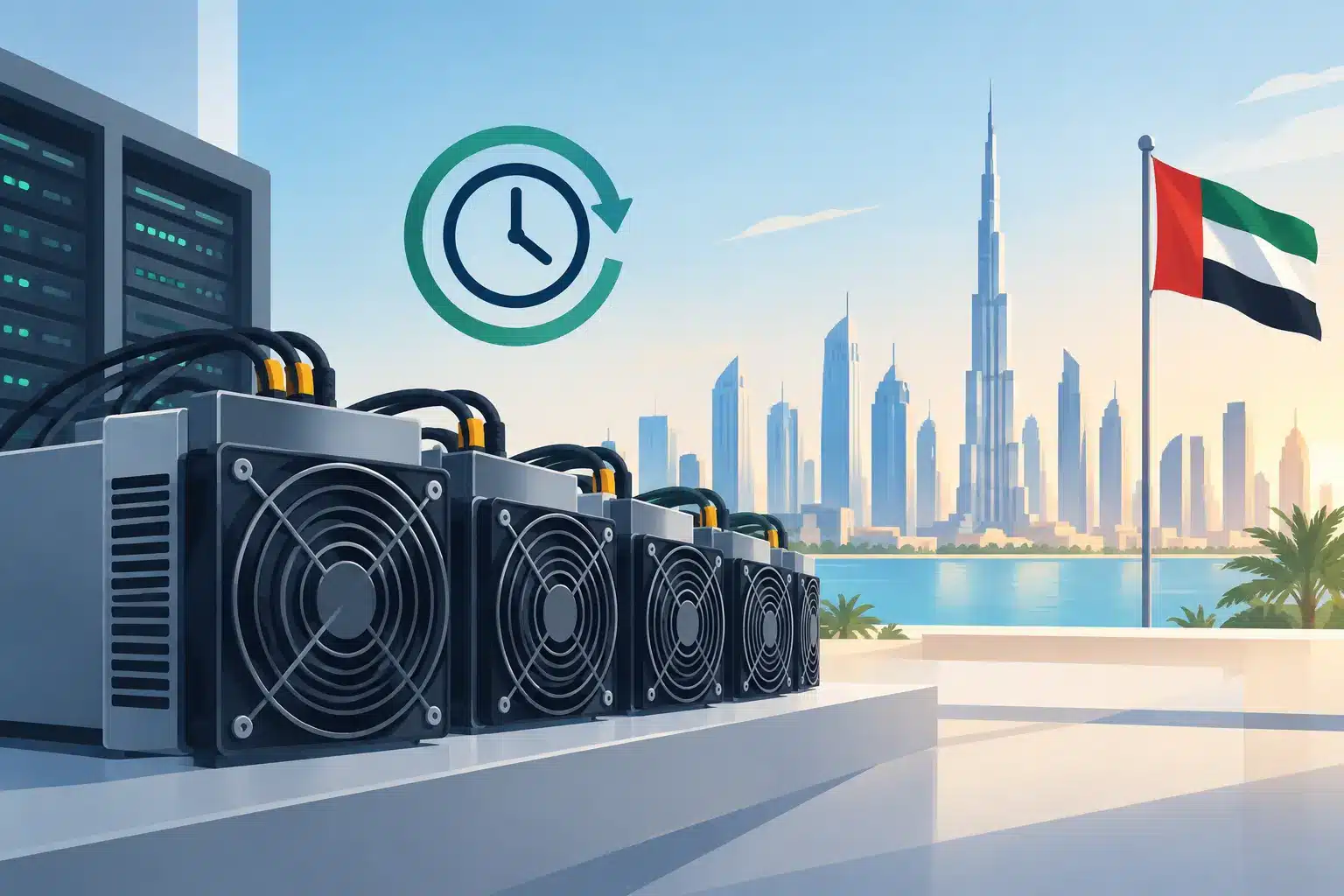
A miner can look profitable on a spreadsheet and still become an expensive idle asset. For investors assessing ASIC miners UAE options, the decisive question is not simply which machine delivers the highest hashrate. It is whether that machine can operate reliably, efficiently and transparently after it has been paid for. Power, heat, deployment speed, repairs and daily oversight all shape the return.
The UAE offers serious advantages for mining operators who want proximity to a professional infrastructure partner, but its climate also makes operational discipline non-negotiable. Buying hardware is the Capex decision. Keeping it productive is the business.
Choosing ASIC miners UAE investors can operate profitably
An ASIC is purpose-built hardware: it performs a specific mining algorithm at a scale that general-purpose computers cannot match. For Bitcoin mining, that normally means selecting a SHA-256 machine and comparing its hashrate, power draw, efficiency and purchase cost against expected operating conditions.
Hashrate gets attention because it determines a miner’s share of available network work. Yet raw terahash is only one side of the equation. A machine producing more hashrate while consuming disproportionately more electricity can weaken margins, particularly when Bitcoin difficulty rises or the BTC price softens. Efficiency, commonly measured in joules per terahash, tells a more useful story about the electricity required to produce that output.
A latest-generation model will often offer stronger efficiency and a longer competitive window than older units. That does not make it the automatic answer. The right fleet depends on the acquisition price, the available kWh rate, cooling design, hosting terms and intended holding period. An investor with a low-cost, long-term power arrangement may make a different decision from a buyer seeking a fast, managed entry point with a smaller portfolio.
Avoid buying on headline specifications alone
Manufacturer specifications are tested under defined conditions. Real-world results can vary with inlet temperature, dust control, firmware, fan performance, pool conditions and curtailment arrangements. Before committing capital, ask for the expected operating power per unit, the hosting site’s environmental design, the process for replacing failed components and how performance is reported.
A credible provider should explain the difference between nominal hashrate and the hashrate likely to be delivered over time. It should also be clear about what happens when a unit needs attention. A miner awaiting a fan, power supply or hashboard repair is not producing revenue, regardless of its specification sheet.
UAE heat changes the hosting conversation
The UAE is a strategic location for digital-asset infrastructure, logistics and investor access. It is also a high-temperature environment for much of the year. ASIC hardware turns substantial electrical input into heat, and poor heat management can lead to thermal throttling, elevated fan wear, component stress and avoidable downtime.
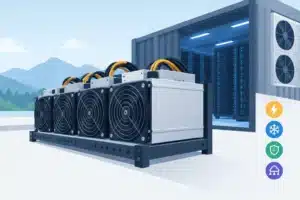
That is why a hosting decision should be evaluated as an infrastructure decision, not a storage arrangement. Air-cooled mining can be effective when a facility has correctly engineered airflow, filtration, extraction and monitoring. However, high-density deployments and demanding ambient conditions may justify hydro-cooling or immersion-style solutions where appropriate. These approaches can improve temperature control and reduce certain mechanical stresses, but they involve different equipment, service requirements and Capex considerations.
Cooling must suit the fleet, not the sales pitch
Hydro-cooled ASICs are not simply air-cooled units with a different plug. They require compatible manifolds, coolant loops, heat exchange capacity and technicians who understand the system. For a large fleet, the density and operational control may be compelling. For a modest number of machines, conventional hosted air cooling may offer a more proportionate route to deployment.
The useful question is: what design keeps this specific fleet within its intended operating range through the hottest periods, while maintaining a sensible cost per deployed terahash? That moves the conversation from marketing labels to operational evidence.
Buy hardware, host it, or build your own site?
There are three common routes into ASIC mining. You can purchase a machine and run it yourself, buy hardware and place it with a hosting provider, or commission dedicated infrastructure for a larger operation. Each route has a different balance of control, workload and risk.
Self-hosting gives direct control, but it places electricity procurement, noise, heat extraction, network reliability, security and repair coordination on the owner. It can work for technically capable operators with suitable premises, but domestic or lightly adapted commercial spaces are rarely designed for continuous high-load mining.
Managed hosting transfers the daily operational burden to a specialist facility. The owner retains exposure to the machine and mined output while the host manages installation, electricity arrangements, monitoring, physical security and maintenance processes. The quality of that arrangement depends on transparency. A low advertised rate has limited value if metering is unclear, support is slow or downtime reporting is vague.
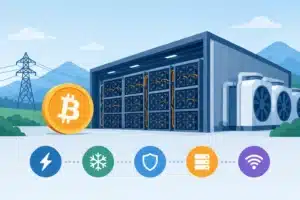
For industrial clients, a dedicated data centre can offer the greatest control over layout, power architecture and scaling. It also requires deeper planning around substations, distribution, cooling, network redundancy, permits, security, PPA structures and ongoing Opex. This is a route for operators treating mining as infrastructure, not a passive purchase.
What a dependable hosting agreement should make clear
Mining returns move with network difficulty, transaction-fee conditions, Bitcoin price and machine efficiency. The hosting agreement should not add unnecessary uncertainty. Before placing ASIC miners in the UAE, establish how every operational cost and responsibility is handled.
Review these points carefully:
- Electricity pricing: confirm the kWh rate, billing basis, taxes or other charges, minimum commitments and any conditions under which pricing can change.
- Uptime and maintenance: understand how outages are recorded, when a fault becomes the host’s responsibility and whether there is a documented repair workflow.
- Monitoring and reporting: look for access to miner-management software, per-unit status, hashrate records, power data and prompt fault notifications.
- Security and custody: establish how machines are labelled, inventoried, protected and released if you relocate or sell them.
- Deployment and support: confirm lead times from payment to installation, the support channel and whether spare parts and technical labour are available locally.
These details are not administrative footnotes. They determine how quickly a fleet begins earning and how much revenue is lost when something goes wrong. A provider that can deploy promptly, monitor around the clock and communicate clearly reduces the gap between owning a miner and operating a mining business.
Model the economics with room for pressure
A responsible mining model begins with expected daily revenue, then subtracts electricity, hosting, pool fees, repair allowance and any finance costs. It should include a realistic estimate for downtime rather than assuming constant nameplate operation. The result is a planning model, not a guarantee.
Stress-test it. What happens if network difficulty climbs while the BTC price remains flat? What if a unit needs a hashboard repair? What if a newer generation of hardware changes the market value of your fleet? These scenarios help define an acceptable acquisition price and show whether a machine still makes sense beyond a favourable month.
For multi-unit buyers, fleet composition also matters. Identical models simplify spares, monitoring and technical processes. A mixed fleet may provide flexibility on purchase price, but it can complicate repair inventory and performance comparisons. There is no universal answer, although operational simplicity has real value as unit counts grow.
From delivered hardware to productive hashrate
The strongest mining setups join hardware selection to operational accountability. Procurement, shipping, rack installation, power connection, pool configuration, monitoring and repair support should work as one managed process. Gaps between suppliers create delays, disputed responsibilities and machines sitting offline while parties point elsewhere.
BitHash approaches this as an end-to-end infrastructure service, combining ASIC sourcing with hosted deployment, monitoring, repair capability and scalable facility options. For a first-time buyer, that can remove the practical barriers between purchase and active mining. For an established operator, it creates a clearer operating framework for adding capacity without building every internal function from scratch.
The next useful step is not to chase the loudest hashrate figure. Match the miner, cooling method and hosting contract to your power economics and time horizon, then insist on visibility once the machines are live. Productive hashrate is built through disciplined operations, one well-managed unit at a time.