A new ASIC does not become a productive asset the moment it arrives. It earns only when power, cooling, network access and qualified hands are in place. Bitcoin farm hosting is the operating layer that turns purchased hardware into active hashrate without forcing an investor to build and run a mining site alone. The right arrangement reduces avoidable downtime and makes operating costs visible before they erode returns.
What bitcoin farm hosting actually covers
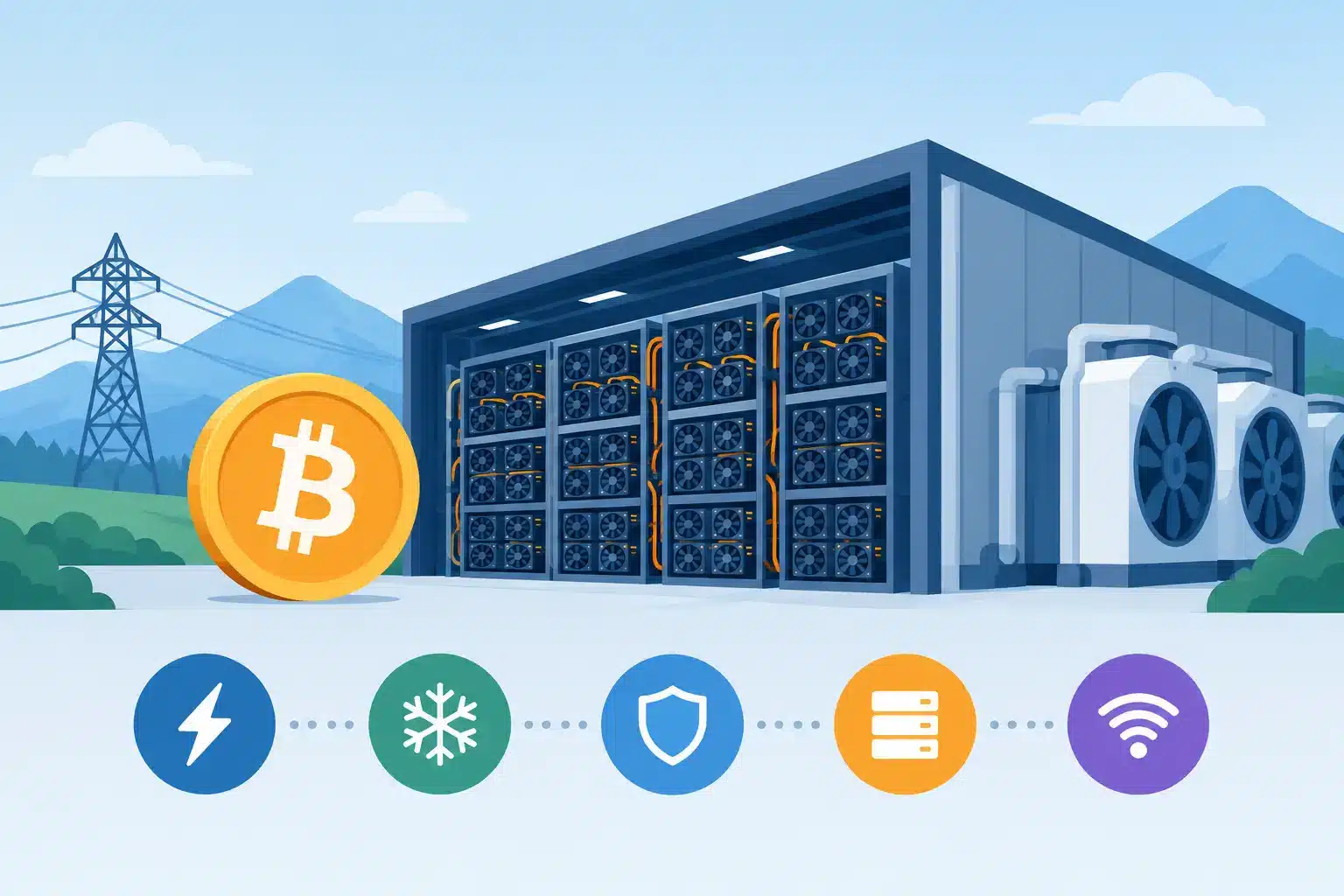
Bitcoin farm hosting is more than shelf space and a power socket. A hosting provider receives your miners, installs them, connects them to a managed electrical and networking environment, monitors their performance and handles day-to-day faults. Depending on the package, the service can also include procurement, import logistics, firmware configuration, repair, spare parts, security and reporting through miner-management software.
That distinction matters because ASIC mining is an operations business. A machine may have an attractive hashrate and efficiency rating on paper, yet its real contribution depends on how consistently it runs. Dust-clogged fans, unstable voltage, delayed repairs and poor airflow can turn a promising fleet into an underperforming one surprisingly quickly.
For a first-time miner, hosting removes the need to manage noise, heat, ventilation and high electrical demand at home or in a commercial unit. For a professional operator, it provides a route to deploy hundreds of machines without committing Capex to a new data centre. The trade-off is clear: you exchange direct site control for specialist operations. That only works when the host is transparent, responsive and technically capable.
Start with the all-in electricity cost
Electricity is usually the largest Opex line in Bitcoin mining, so the headline kWh rate should never be your only comparison point. Ask whether the quoted price includes power delivery, facility fees, monitoring, maintenance, pool connectivity and applicable taxes. A low rate can lose its appeal if separate charges appear for installation, remote hands, repairs or power-factor adjustments.
You should also understand the pricing structure. A fixed tariff provides predictability, while a variable rate may track local energy markets or a power purchase agreement. Either can be sensible, but the terms must be explicit. If rates change, establish how much notice you receive, what drives the change and whether there is a contractual ceiling.
Use your miners’ actual power draw rather than the manufacturer’s best-case figure. A 3.5 kW machine running continuously consumes roughly 84 kWh per day before any hosting charges. Multiply that by your all-in electricity rate, then compare the result against expected mining revenue under conservative Bitcoin price and network difficulty assumptions. Hosting cannot remove market risk, but clear pricing prevents operational surprises.
Uptime is not just a percentage on a brochure
A provider may advertise high uptime, but the useful question is how that figure is measured. Does it refer to grid availability, facility availability or the percentage of your individual miners hashing? These are not interchangeable. A site can have live power while a miner remains offline because of a failed fan, damaged hashboard or delayed technician response.
Ask for a practical view of the operation: how are offline machines detected, who receives the alert, how quickly is a technician assigned and what happens if a repair needs approval? The strongest hosting operations combine 24/7 monitoring with a clear escalation process, parts availability and documented service records.
Network resilience deserves the same scrutiny. Miners need stable pool connectivity, and interruptions can affect realised hashrate even when the equipment is powered. Redundant internet connections, monitored switches and sensible network segmentation are operational essentials, particularly for larger fleets.
For industrial portfolios, request reporting that separates installed hashrate from online hashrate and identifies the cause of downtime. This turns vague assurances into measurable performance. If a fleet is consistently producing below expectation, you need to know whether the cause is curtailment, hardware failure, configuration, pool-side issues or planned maintenance.
Cooling determines the life of the fleet
Heat is one of the most expensive hidden variables in mining. Air-cooled ASICs need sufficient airflow, filtration and heat extraction to operate within their intended range. When intake temperatures rise or airflow is restricted, fans work harder, components experience greater stress and the likelihood of thermal shutdowns increases.
The cooling design should suit both the climate and the density of the installation. In warmer regions, a facility needs more than large fans. It needs engineered air paths, well-managed hot and cold zones, dependable ventilation and disciplined cleaning schedules. In the UAE, where ambient conditions can be demanding, facility design and continuous environmental monitoring are central to consistent output.
Hydro-cooling hosting can be a compelling option for high-density deployments and compatible ASIC models. It can reduce noise, improve thermal control and support concentrated hashrate, but it is not automatically the best choice. It requires compatible equipment, specialised plumbing, water-quality management and technicians who understand the system. Compare the efficiency and deployment benefits against the additional infrastructure cost.
Security, ownership and access should be written down
Your ASICs are capital assets, often held in a location far from your day-to-day business. Physical security therefore matters as much as digital security. Look for controlled facility access, CCTV coverage, asset labelling, inventory records and a documented chain of custody from delivery through installation.
The hosting agreement should state who owns the machines at every stage, how serial numbers are recorded, what insurance applies and how equipment can be collected or relocated. It should also define liability in the event of theft, fire, transport damage or extended outages. Vague terms create friction precisely when a fleet needs decisive action.
Remote access needs boundaries too. You should be able to view your miners’ status, hashrate, temperature and power use through miner-management software, while the operator retains the access required to protect the wider network and respond to faults. Clear permissions are safer than improvised logins shared across multiple parties.
How to choose a bitcoin farm hosting partner
Do not choose a host on price alone. The cheapest quote can become costly when deployment drags on, communication is poor or machines sit awaiting simple repairs. A better process is to compare providers against the operational factors that directly affect realised returns:
- Confirm the all-in kWh price, billing cycle, deposit requirements and any extra service fees.
- Review deployment timing from payment confirmation to active hashing, including the process for newly purchased ASICs.
- Ask how hardware faults are diagnosed, approved, repaired and reported, and whether spare parts are available on site.
- Verify the facility’s security, cooling method, power redundancy and network monitoring.
- Read the exit, relocation and equipment-collection terms before committing a large fleet.
It also helps to match the package to the size of your operation. A solo miner may value a straightforward plug-and-mine service and clear support channel. A portfolio owner may need consolidated reporting across several models. An institutional operator may require dedicated capacity, custom electrical architecture, formal SLAs and a defined expansion plan.
A service-led infrastructure partner such as BitHash should be able to support that progression, from sourcing suitable ASICs through to hosting, monitoring and repair. The advantage is accountability: fewer handovers between hardware seller, logistics firm, data centre and maintenance team.
Hosting is a performance decision
Bitcoin mining profitability moves with the Bitcoin price, network difficulty, transaction-fee conditions and the efficiency of your equipment. No hosting provider can control those market variables. What a capable operator can control is whether your machines are installed quickly, powered reliably, cooled correctly and repaired without unnecessary delay.
Before sending a single miner, test the provider’s answers against the economics of your own fleet. Begin with transparent power costs, insist on measurable uptime reporting and make sure support procedures are as clear as the sales proposal. When the operating foundation is sound, every additional machine has a better chance of contributing the hashrate you paid for.