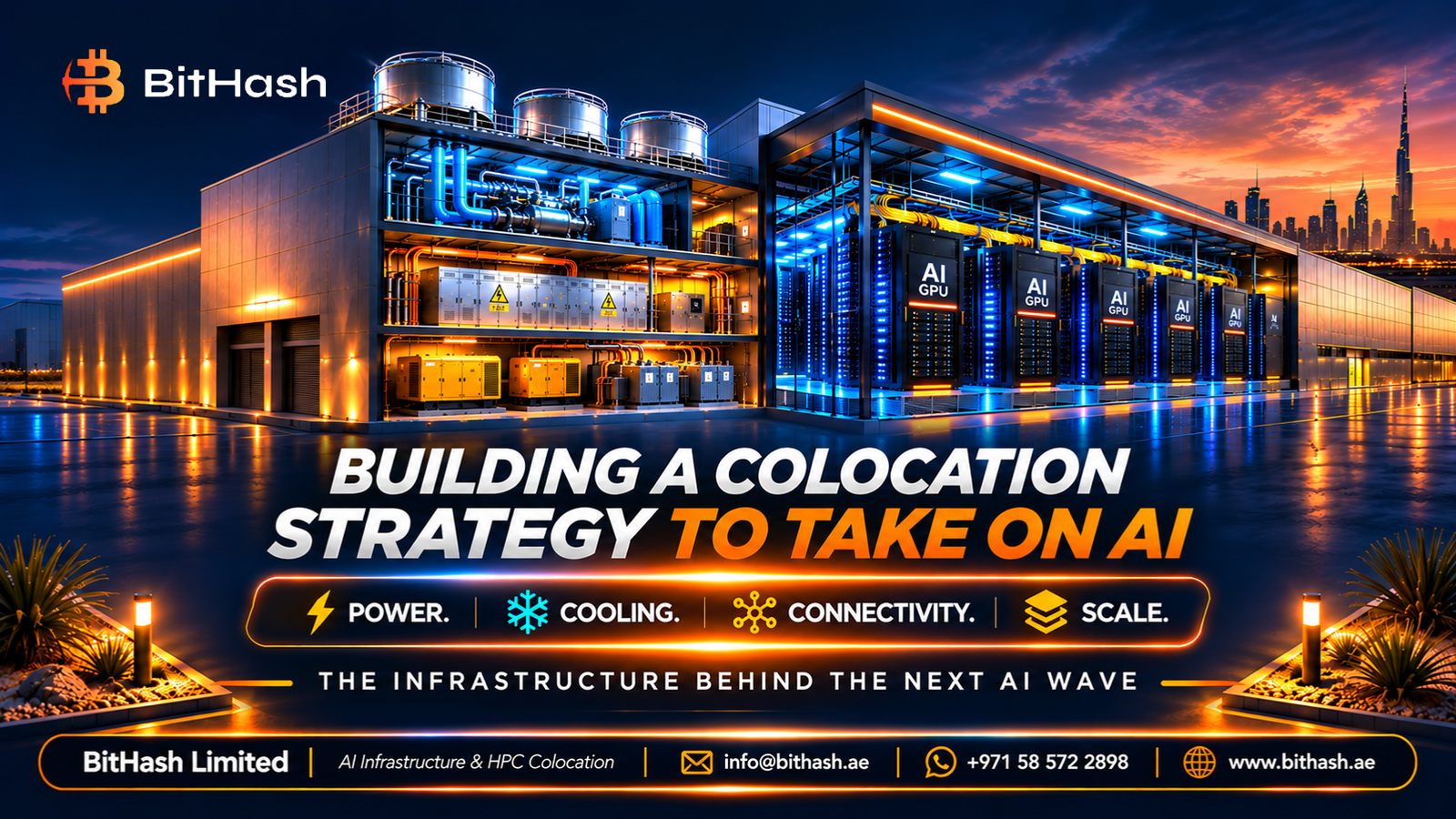
The rapid growth of AI is changing what businesses expect from data centers. Companies are no longer looking for just a place to store servers. They need facilities that can handle powerful GPUs, demanding workloads, high electricity use and the heat that comes with running these systems around the clock. This has created opportunities for AI Colocation providers. Businesses can use existing data center facilities of paying the cost and dealing with the complexity of building own data center facilities.. Not every data center facility is ready for AI. Power capacity, cooling and room for expansion now play a much bigger role in choosing the right AI Colocation provider.
Building an AI Colocation Strategy Around Power and Cooling
Power and cooling go hand in hand with AI setups. The fast GPUs take a lot of juice to run. The more power they pull, the more heat they give off. A building has to manage both needs without risking the gear. The International Energy Agency reported that data center electricity use increased by 17% in 2025, with AI-focused facilities seeing even faster growth. Its findings show why access to reliable electricity is becoming a major concern for data center operators. The IEA’s 2026 analysis looks at the growing pressure on energy infrastructure. Cooling presents another challenge. Traditional air cooling can work well for server environments, but high-density AI systems may need something more advanced. Liquid cooling, including direct-to-chip systems, is gaining attention because it can remove heat effectively from powerful hardware. JLL’s research on cooling examines why these systems are becoming more important.
What Businesses Should Expect From AI Colocation Providers
Choosing a facility involves more than checking how much server space a facility has. Businesses need to understand whether a provider can support their equipment today and whether a provider can handle capacity later.
Some of the most important things to look at include:
- Power supply: Grid access, backup generators, UPS systems, and the ability to support high-density racks.
- Cooling systems: Air or liquid cooling that matches the needs of the hardware.
- Network connections: Reliable bandwidth, low latency links and access to major cloud platforms.
- Expansion options: Enough space and power to add more servers as demand grows.
- Uptime protection: Backup power and network systems that help prevent unexpected interruptions.
These details matter even more for GPU Colocation, where powerful hardware can place much greater demands on a facility than conventional server setups.
How AI Demand Is Changing Data Center Planning
The expected growth is putting pressure on data center developers. JLL’s 2026 outlook forecasts that 100 GW of new data center capacity could be added worldwide between 2026 and 2030. Access to power is one of the factors influencing where new facilities are built. JLL’s 2026 market outlook provides detail on these developments.
The difference in power requirements can be significant:
| Computing setup | Indicative rack power |
| Typical data center rack | Around 10–11 kW |
| High-density AI training | 40–100+ kW |
| Advanced AI deployments | Varies by hardware and design |
These figures are general examples, not fixed requirements. Actual power needs depend on the servers, GPUs, and configuration used in each facility.
Preparing for the Next Stage of AI Growth
For companies thinking about Hyperscale Data Centers, today’s capacity is one part of the decision. They also need connectivity, direct cloud access, strong security, backup systems and the ability to expand without major disruption. I believe modern AI Data Centers must also pay attention to energy efficiency. Simply adding power is not enough. Operators need cooling systems and facility designs that make use of available electricity while keeping equipment running reliably. AI is raising the standard for colocation services. Providers that plan carefully for power, cooling and future capacity will be better placed to meet customer needs as computing demands continue to grow.
BitHash
Verified AnalystBitHash Infrastructure, UAE Colocation & Mining Intelligence Team