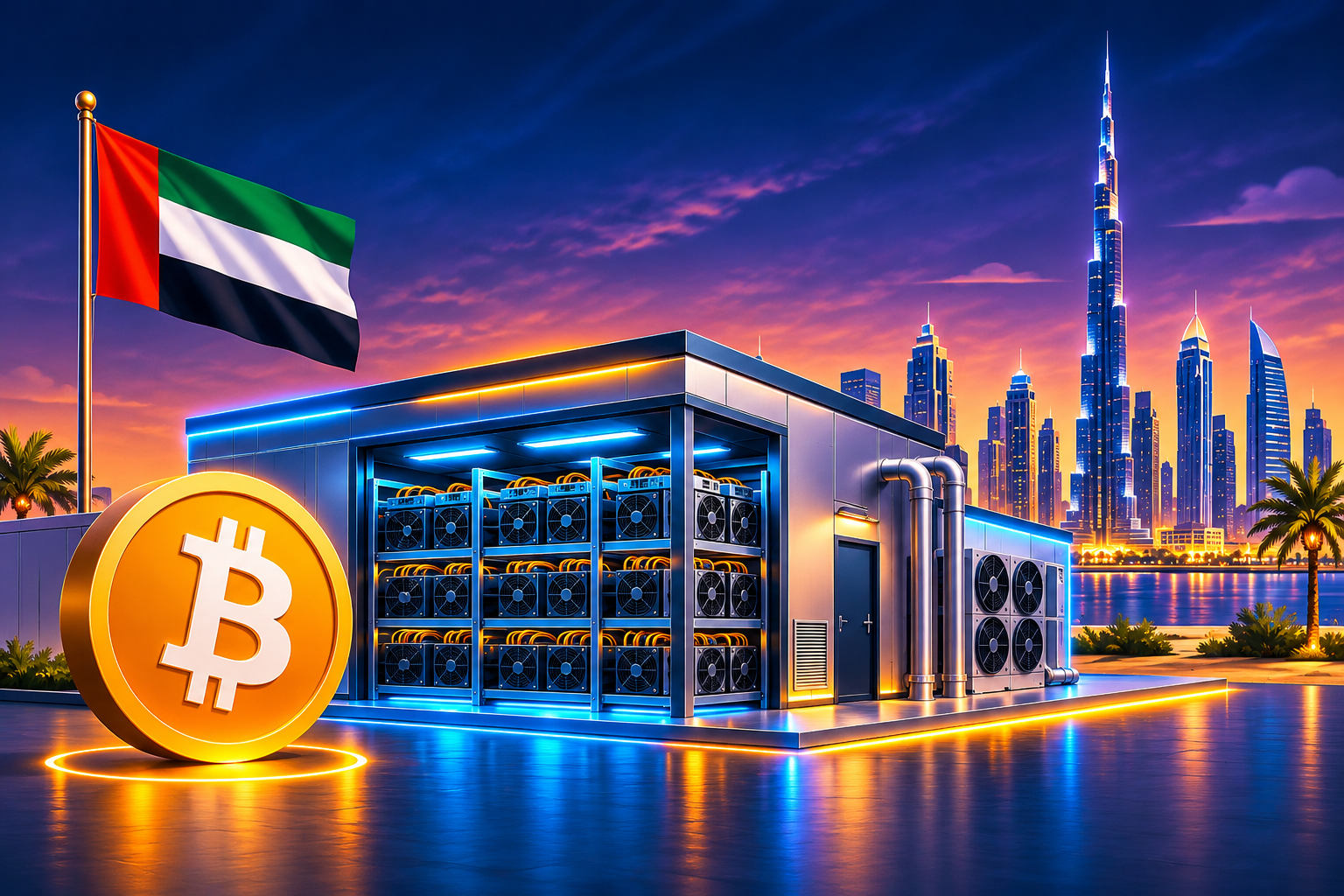
Dubai’s crypto conversation often starts with exchanges, token launches and investor events. For miners, the more valuable question is different: can the infrastructure support ASIC hardware profitably, securely and continuously? That is where crypto Dubai becomes an operational story, not simply a market headline.
Bitcoin mining is a physical business with digital output. Machines need stable power, effective heat management, round-the-clock oversight and rapid technical intervention when performance drops. A favourable market narrative cannot compensate for poor uptime, unclear electricity terms or hardware that sits idle waiting for a repair.
Why crypto Dubai matters to mining operators
Dubai has built a reputation as a serious digital-asset centre, supported by a business environment that attracts entrepreneurs, capital and specialist service providers. That matters for mining because proximity to capable infrastructure partners can reduce the distance between an investment decision and an active hashrate deployment.
For an individual buying a small number of ASICs, that may mean avoiding the practical burden of arranging delivery, installation, network configuration and daily monitoring alone. For an operator deploying 150 machines or more, it can mean a structured route to capacity, security procedures, maintenance coverage and reporting that supports a larger capital programme.
The advantage is not that one location automatically makes mining profitable. Mining economics still depend on Bitcoin price, network difficulty, machine efficiency, pool performance, uptime and the agreed cost of power. The real opportunity is to place hardware within an operation designed to control the variables that can be controlled.
A market for ownership, not only speculation
There is a meaningful distinction between holding digital assets and operating mining infrastructure. Holding BTC gives direct price exposure. Owning or hosting ASIC miners adds operating exposure: hashrate production, electricity consumption, hardware depreciation and performance management.
Neither route is inherently better. It depends on the investor’s time horizon, risk appetite and ability to handle Opex. Mining can suit those seeking direct exposure to Bitcoin production and who understand that revenue is variable. It is not a guaranteed-income product, and any serious deployment should be assessed using conservative assumptions rather than headline daily revenue figures.
The infrastructure questions that decide returns
An ASIC can be delivered quickly. Keeping it productive for months and years requires much more. Before committing capital, miners should ask how a facility handles power, cooling, connectivity, security and maintenance in practice.
Power pricing needs context
A low advertised kWh rate is attractive, but it is not the whole cost picture. Miners need to know whether the quoted figure includes electricity only or also hosting, rack space, monitoring, pool configuration, maintenance labour and applicable taxes or administrative charges.
The contract structure matters as well. Is the price fixed, indexed or subject to a minimum consumption commitment? Is there a deposit? Are curtailment provisions possible during grid constraints? Clear answers allow an operator to model Opex honestly and compare sites on a like-for-like basis.
For larger fleets, power procurement can become a strategic decision. A provider with experience of electricity arrangements and, where appropriate, PPA structures may help operators plan capacity with greater confidence. However, long-term commitments should match the expected useful life and efficiency of the chosen hardware.
Cooling is a revenue protection system
Heat is not a cosmetic issue in mining. It can reduce ASIC stability, increase fan wear, trigger shutdowns and shorten component life. In a hot climate, cooling design has a direct bearing on uptime and maintenance costs.
Air-cooled hosting may be appropriate for many deployments when airflow, filtration and ambient conditions are managed properly. Hydro-cooling can be the stronger option for high-density deployments and compatible machines, particularly where an operator wants tighter temperature control and more efficient heat removal. The trade-off is higher infrastructure complexity and a need for experienced installation and servicing.
A hosting provider should be able to explain the cooling method, operating thresholds, environmental monitoring and response process for thermal alerts. Vague assurances are not enough when every hour offline reduces realised hashrate.
Uptime depends on response time
Even premium ASICs fail occasionally. Fans, power supply units, hashboards and control boards all require diagnosis and, sometimes, replacement. What matters is whether the operator has visibility of the issue and a credible path to resolution.
Look for 24/7 monitoring, alerting that identifies underperforming machines, physical security controls and a defined repair workflow. Ask who authorises repairs, how costs are communicated and whether spare parts are held locally. A machine that is technically repairable but waiting weeks for logistics can be a costly asset.
Miner-management software also deserves attention. At fleet level, a dashboard should provide visibility of hashrate, temperatures, worker status, pool configuration and fault history. It does not eliminate operational risk, but it turns fragmented equipment into an observable portfolio.
Choosing ASIC hardware for the deployment, not the brochure
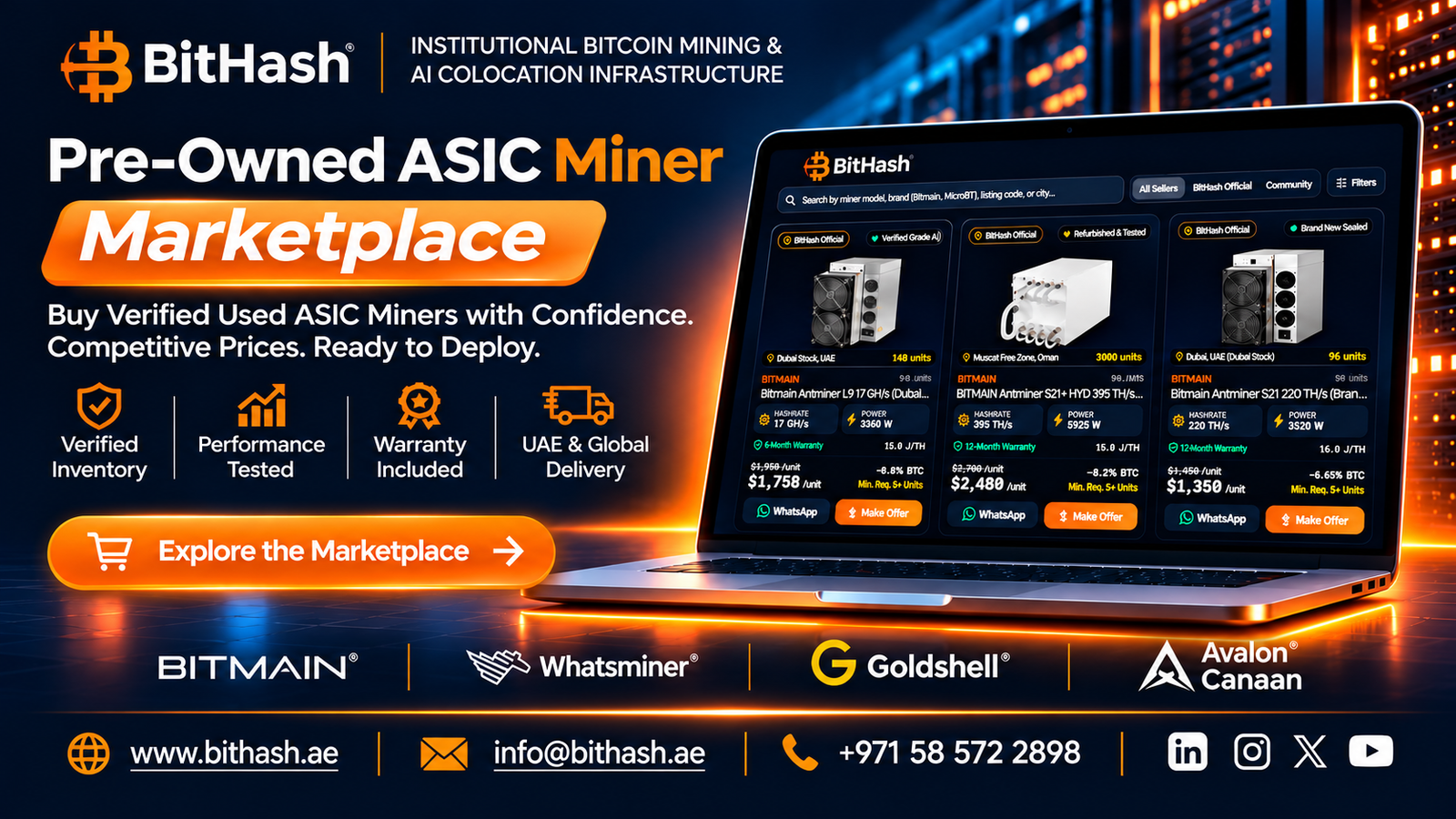
The newest ASIC is not automatically the right ASIC. A leading model may offer excellent joules-per-terahash efficiency, yet the purchase price can lengthen the payback period. An older machine may cost less upfront but consume more electricity, making it vulnerable when margins tighten.
The correct selection depends on the available power rate, hosting environment, budget and scale target. A practical model starts with efficiency, measured in J/TH, then tests likely revenue against power draw, pool fees, hosting charges and a realistic uptime assumption. It should also account for delivery, customs, installation and a repair reserve.
For example, a buyer with competitively priced power may find a broader range of air-cooled ASICs viable. A fleet running on higher-cost energy generally needs stronger efficiency to stay competitive. If hydro-cooling capacity is available, compatible models may justify their additional Capex through density and thermal performance, but only after the full infrastructure cost is included.
Avoid basing a procurement decision on a single day’s profitability calculator result. Difficulty changes, BTC prices move and machine output varies. Sensitivity modelling across several price and difficulty scenarios gives a clearer view of downside exposure.
Managed hosting versus self-operation
Running a private mining site offers maximum control, but it also places every operational responsibility on the owner: site selection, utility arrangements, electrical engineering, ventilation or liquid cooling, network design, security, technicians and compliance. This can make sense for sophisticated operators with reliable access to power and an experienced team.
Managed hosting shifts much of that burden to a specialist provider. The miner still owns the hardware and mining strategy, while the host provides the operating environment. For new entrants and investors building a portfolio, this can reduce complexity significantly. For professional fleets, it can accelerate expansion without waiting to build a facility from the ground up.
The trade-off is provider dependency. Due diligence should cover facility access, ownership terms, reporting frequency, electricity billing, insurance arrangements, exit conditions and the process for moving machines if required. Transparency is a commercial feature, not a marketing extra.
Building a scalable crypto Dubai mining plan
A sensible deployment begins with the desired outcome. Is the goal to learn with two or three miners, build a portfolio of 20 machines, or commission dedicated capacity for hundreds of units? Each path needs a different procurement, cash-flow and support plan.
Start small if you are testing the model, but do not buy equipment that cannot be supported at scale. Standardising on a manageable range of ASIC models makes monitoring, spares and repairs easier. Keep a clear separation between hardware Capex and ongoing Opex, and maintain working capital for electricity, repairs and periods of lower mining revenue.
For larger deployments, ask whether the provider can move from initial installation to dedicated racks, hydro-cooling capacity or a custom data-centre build without forcing a full operational reset. BitHash supports this end-to-end approach, from ASIC sourcing and deployment to managed hosting, monitoring and maintenance, so miners have one accountable infrastructure partner rather than a chain of disconnected suppliers.
The strongest crypto Dubai opportunity is not simply buying machines near a fast-moving market. It is building a mining operation where every terahash has a clear home, every cost is visible and every fault has an owner. Start with infrastructure discipline, then let the fleet earn the right to scale.
BitHash Editorial
Verified AnalystBitHash Infrastructure, UAE Colocation & Mining Intelligence Team