
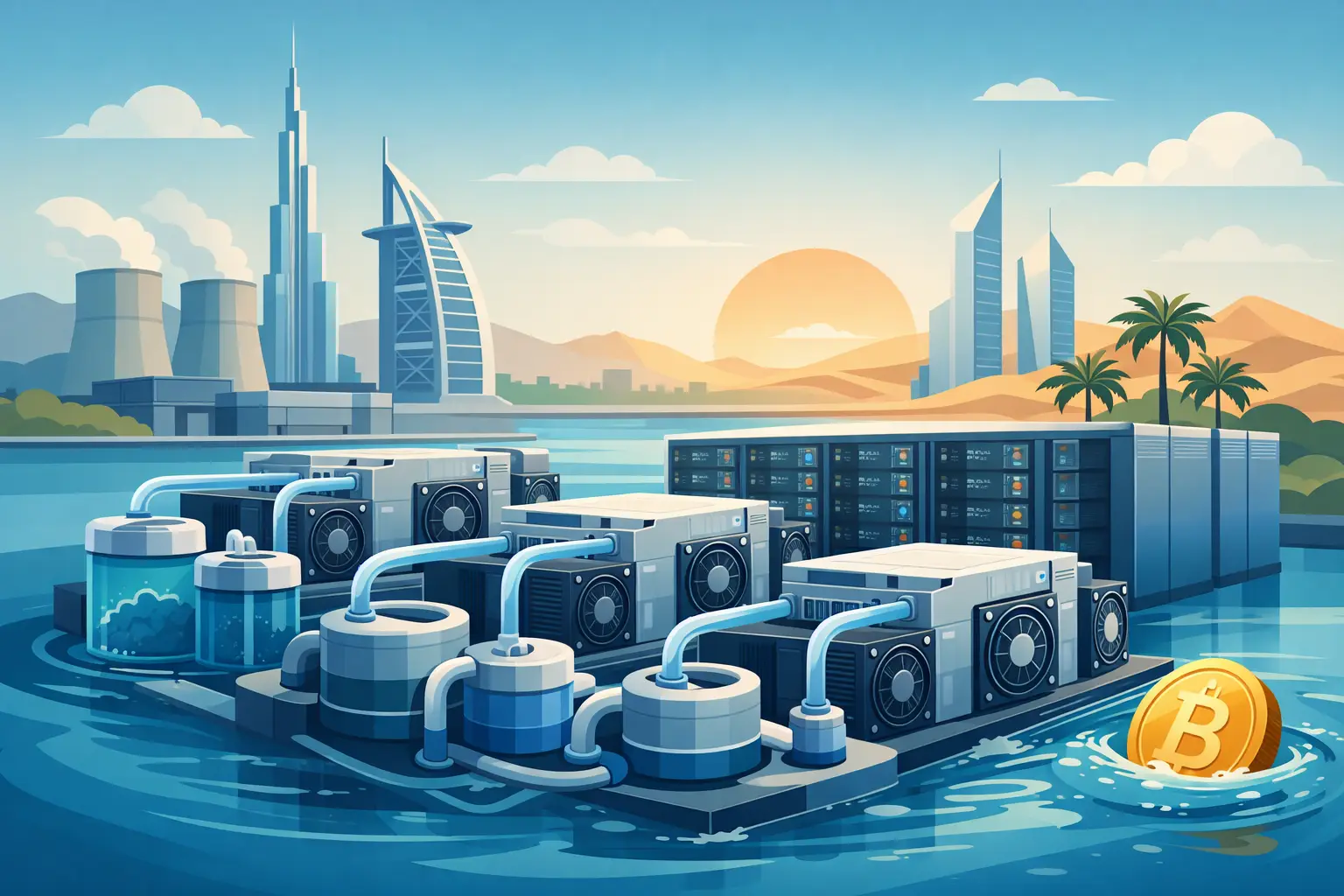
A hydro-cooled ASIC can turn a limited rack footprint into serious hashrate capacity, but only when the facility is designed to support it. Hydro ASIC hosting UAE is not simply standard miner hosting with water pipes added. It is a specialist operating model built around liquid loops, heat exchange, power density, water quality and engineers who can keep every component performing under continuous load.
For investors running a few high-performance units, hydro hosting can remove a large amount of operational complexity. For fleet operators, it can be the difference between constrained expansion and a properly engineered deployment. The return still depends on Bitcoin price, network difficulty, machine efficiency and electricity cost. Cooling alone does not make a mining operation profitable. What it does is give modern, high-density hardware the conditions it needs to operate consistently.
Why Hydro ASIC Hosting Is Different
Air-cooled miners use fans to push heat away from hashboards. This approach is familiar, comparatively simple and well suited to many deployments. Yet the newest high-output machines produce substantial heat in a compact physical space. As fleet density rises, air cooling demands more airflow, larger clearances and greater attention to hot-aisle containment.
Hydro ASICs replace much of that fan-driven heat removal with liquid cooling. Coolant circulates through the miner, carrying heat to a heat exchanger where it can be rejected safely. The result is tighter temperature control, less dependence on high-speed fans and the potential to deploy more hashrate per rack or container.
That potential matters in a UAE facility. Ambient temperatures place real demands on any mining site, particularly during hotter months. A properly specified hydro system gives the operator more control over the thermal environment than a basic ventilation-led set-up. It does not eliminate the need for engineering. It makes engineering more central to the hosting decision.
The Operational Case for Hydro-Cooled Fleets
The strongest argument for hydro cooling is normally density. Where a customer wants to add meaningful hashrate without expanding the building footprint at the same pace, hydro infrastructure can support a more compact arrangement. This is especially relevant for professional operators working with dedicated capacity, custom container projects or data-centre deployments.
Temperature stability is the second major advantage. ASICs perform best when operating within their intended thermal range. Excess heat can trigger throttling, alarms, avoidable component wear and downtime while faults are investigated. Hydro systems can maintain more consistent inlet temperatures across a fleet when the pumps, loops and heat-rejection equipment are correctly sized.
Noise is also materially lower at the miner level because hydro units do not rely on the same volume of high-speed fan activity. This does not make a mining facility silent: pumps, heat exchangers and supporting equipment still generate sound. It can, however, make site planning more manageable where acoustic conditions matter.
For large operations, lower fan demand may reduce a portion of auxiliary power consumption. The scale of the benefit varies by miner model, coolant temperature, site design and local conditions. It should be evaluated as part of total facility PUE and Opex, rather than treated as a guaranteed saving on every deployment.
What a Hydro Hosting Facility Must Get Right
A hydro miner is only as reliable as the infrastructure surrounding it. Before committing capital, miners should look beyond advertised hashrate and ask how the host manages the full cooling chain.
Heat rejection and redundancy
The facility needs enough heat-exchange capacity to handle the fleet at full load, including realistic seasonal conditions. It also needs sensible redundancy in pumps, power distribution and control systems. If one circulation pump or exchanger failure can affect an entire deployment, the risk profile is very different from a design with backup capacity and clear isolation zones.
Water and coolant management
Liquid loops require disciplined maintenance. Water quality, filtration, corrosion protection, pressure and leak detection all affect long-term reliability. Poorly maintained coolant can create scaling or corrosion issues that do not appear immediately but can damage performance and increase repair costs over time.
Ask whether the system is closed-loop, how often fluids are tested, who monitors pressure and flow, and what happens if an abnormal reading appears at 02:00. A credible hosting provider should have a defined response process, not a vague assurance that the site is monitored.
Power delivery at high density
Hydro hosting allows more machines in less space, which means each rack, busway and distribution board can carry more load. The electrical design must match the density. This includes circuit protection, cable sizing, metering and the capacity to isolate equipment without taking a wider fleet offline.
Transparent electricity pricing is just as important as electrical engineering. Miners should understand the kWh rate, any service charges, the billing basis, minimum commitments and whether the price reflects a fixed tariff, a PPA-backed structure or a variable arrangement. A low headline rate means little if the terms are unclear.
Monitoring that leads to action
Remote visibility should cover more than a pool dashboard. A serious hydro deployment benefits from miner-level hashrate monitoring alongside inlet and outlet temperatures, flow rate, pressure, pump status and power consumption. Data only creates value when someone is accountable for responding to it.
The best operating model combines automated alerts with technicians who can inspect a unit, reseat connections, replace a failed component and return the miner to service quickly. For an owner, that means less time chasing updates and more confidence that downtime is being actively managed.
Is Hydro ASIC Hosting UAE Right for Your Operation?
Hydro hosting is not automatically the best option for every miner. A solo buyer with one or two machines may find an air-cooled hosting package more accessible, particularly if the chosen ASIC model is fan-cooled and available capacity is standardised. The key question is not whether hydro technology is more advanced. It is whether its advantages justify the machine choice, hosting rate and deployment model.
Hydro cooling becomes more compelling when you are purchasing hydro-native ASICs, building a meaningful fleet, prioritising high-density capacity or planning to scale in stages. It can also suit investors who want premium hardware operated under controlled conditions without building their own thermal and electrical infrastructure.
There is a Capex consideration too. Hydro miners and their compatible hosting environments may carry a different initial cost profile from air-cooled alternatives. Evaluate the complete picture: purchase price, delivered hashrate, watts per terahash, hosting tariff, expected uptime, repair pathway and resale liquidity. A lower initial machine price can be less attractive if it leads to poorer efficiency or constrained capacity later.
Questions to Ask Before You Deploy
Before placing an order, confirm that the hosting provider supports your exact miner model and firmware configuration. Ask for the expected deployment timeline after payment confirmation, the commissioning process, access to miner-management software and the procedure for approving repairs or replacing failed parts.
For larger fleets, request clarity on dedicated versus shared infrastructure. Dedicated capacity may offer greater control and expansion certainty, while shared hosting can provide a faster route to active mining at a smaller starting commitment. Neither is universally better. The right structure depends on your fleet size, investment horizon and appetite for fixed commitments.
Security deserves the same attention as cooling. Your hardware should be protected through controlled site access, surveillance and documented asset tracking. Insurance arrangements, serial-number records and procedures for shipping units in and out of the site should be straightforward to verify.
From Purchase Order to Active Hashrate
The value of managed hydro hosting is operational continuity. Hardware sourcing, international logistics, installation, electricity arrangements and maintenance are separate disciplines. When they are fragmented across multiple suppliers, delays and accountability gaps can eat into the time a miner should be earning.
A single infrastructure partner can simplify that chain. BitHash supports ASIC procurement and managed hosting with UAE-based operational support, allowing customers to move from hardware selection to live deployment without coordinating every technical hand-off themselves. For experienced operators, this creates a clearer path to scaling. For new miners, it removes the need to become a cooling engineer before owning their first ASIC.
Hydro cooling is a performance tool, not a shortcut. Choose it when the facility, hardware and commercial terms are aligned, then judge the provider on its ability to keep your fleet online long after installation day.