
Introduction
When most people think about Bitcoin mining, they picture rows of powerful ASIC miners solving complex mathematical problems and generating Bitcoin rewards.
While the mining hardware itself is important, the reality is that successful Bitcoin mining in 2026 is powered by something much larger:
The modern Bitcoin mining data center.
Today’s most profitable mining operations are no longer built in garages, warehouses, or spare rooms. Instead, they operate from highly engineered facilities designed specifically to maximize efficiency, uptime, scalability, and profitability.
Behind every successful mining operation is a combination of:
- Power infrastructure
- Cooling systems
- Network connectivity
- Monitoring technology
- Security systems
- Operational expertise
As Bitcoin mining becomes increasingly competitive, infrastructure has become one of the industry’s greatest competitive advantages.
In this guide, we’ll take a deep dive inside a modern Bitcoin mining data center and explore the systems that truly power mining success.
What Is a Bitcoin Mining Data Center?
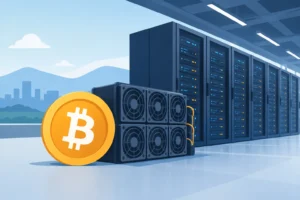
A Bitcoin mining data center is a specialized facility designed to house, power, cool, monitor, and maintain large numbers of ASIC mining machines.
Unlike traditional data centers that support cloud computing, websites, and enterprise applications, mining facilities are specifically optimized for one purpose:
Maximizing Bitcoin production while minimizing operational costs.
These facilities can range from small deployments containing a few hundred miners to industrial-scale operations consuming multiple megawatts of power.
The most successful mining data centers focus on efficiency at every level.
Why Infrastructure Matters More Than Ever
Bitcoin mining has evolved significantly over the past decade.
In the early years, profitability was driven primarily by:
- Bitcoin price appreciation
- Early adoption advantages
- Limited competition
Today, the mining industry is far more mature.
Modern miners compete against:
- Institutional mining companies
- Publicly traded mining firms
- Multi-megawatt facilities
- Global infrastructure operators
As a result, operational efficiency has become critical.
Even minor infrastructure improvements can significantly impact profitability.
The Foundation of Every Mining Data Center: Power Infrastructure
Electricity is the single most important resource in Bitcoin mining.
Without reliable power, no mining operation can succeed.
For most facilities, electricity represents the largest ongoing operating expense.
Why Power Matters
Every ASIC miner continuously consumes electricity while generating hashrate.
A single modern ASIC machine may consume several thousand watts.
Multiply this by hundreds or thousands of miners, and power requirements become enormous.
Industrial mining facilities often consume:
- Hundreds of kilowatts
- Multiple megawatts
- Tens of megawatts in large deployments
Managing this power efficiently is essential.
Key Components of Power Infrastructure
Professional mining facilities typically include:
Transformers
Convert incoming electrical power into usable voltage levels.
Distribution Panels
Safely distribute electricity throughout the facility.
Circuit Protection Systems
Protect equipment from electrical faults.
Power Monitoring Systems
Track energy usage and performance.
Redundant Components
Reduce operational risk and improve uptime.
Reliable power infrastructure forms the backbone of every successful mining operation.
Cooling: The Unsung Hero of Bitcoin Mining
Bitcoin miners generate substantial amounts of heat.
Without proper cooling, mining hardware quickly experiences:
- Reduced efficiency
- Higher failure rates
- Increased maintenance costs
- Unexpected downtime
Cooling is one of the most important factors affecting mining profitability.
Why Heat Is a Problem
ASIC miners operate continuously.
As computational activity increases, heat production rises.
If temperatures exceed safe limits:
- Hashrates may decrease
- Equipment may throttle performance
- Hardware lifespan may shorten
Professional facilities invest heavily in thermal management.
Modern Cooling Solutions
Today’s mining data centers utilize several cooling approaches.
Air Cooling
Industrial fans and engineered airflow systems remove heat efficiently.
Hot Aisle / Cold Aisle Design
Separates intake and exhaust air to improve cooling performance.
Liquid Cooling
Advanced facilities increasingly use liquid cooling technologies.
Environmental Monitoring
Real-time temperature monitoring helps optimize operations.
Cooling efficiency often determines whether a mining facility remains profitable over the long term.
The Importance of Uptime
Mining hardware only generates revenue while operating.
This makes uptime one of the most important performance metrics in the industry.
What Is Uptime?
Uptime measures the percentage of time mining equipment remains operational.
Professional facilities typically target:
- 95%
- 98%
- 99% uptime
Higher uptime means:
- More Bitcoin production
- Greater revenue consistency
- Faster ROI
How Data Centers Maximize Uptime
Professional facilities maintain uptime through:
Preventative Maintenance
Identifying issues before failures occur.
Monitoring Systems
Detecting performance problems in real time.
Reliable Infrastructure
Reducing power and cooling disruptions.
Technical Support Teams
Resolving issues quickly.
Uptime directly impacts profitability and operational success.
Network Connectivity: Keeping Miners Online
Mining equipment must communicate continuously with mining pools.
Without connectivity, Bitcoin production stops.
Why Connectivity Matters
Even if hardware remains powered, network interruptions prevent mining activity.
This results in:
- Lost revenue
- Reduced efficiency
- Operational disruptions
Modern Network Infrastructure
Professional mining facilities utilize:
Enterprise Networking Equipment
Designed for reliability and performance.
Redundant Internet Connections
Reduce outage risks.
Network Monitoring
Provides visibility into performance issues.
Reliable connectivity is essential for maintaining consistent mining operations.
Monitoring and Automation
Modern Bitcoin mining facilities generate enormous amounts of operational data.
Professional operators use monitoring systems to track:
- Hashrate performance
- Power consumption
- Temperature levels
- Equipment status
- Network activity
Why Monitoring Matters
Without monitoring, small issues can become major problems.
Examples include:
- Rising temperatures
- Declining hashrates
- Hardware degradation
- Connectivity issues
Real-time visibility helps operators respond quickly.
The Role of Automation
Automation enables facilities to:
- Detect failures instantly
- Improve maintenance efficiency
- Reduce human error
- Optimize operational performance
As mining operations scale, automation becomes increasingly valuable.
Physical Security and Asset Protection
Mining hardware represents a significant financial investment.
Security is a critical component of every professional mining facility.
Physical Security Measures
Professional facilities commonly implement:
- Access control systems
- Security cameras
- Perimeter protection
- Visitor management procedures
These measures help protect valuable equipment.
Operational Security
Security also includes:
- Network protection
- Monitoring systems
- Data security controls
Comprehensive security supports operational stability and business continuity.
Scalability: Designing for Future Growth
The most successful mining facilities are designed with expansion in mind.
As mining operations grow, infrastructure must support:
- Additional ASIC miners
- Increased power consumption
- Expanded cooling requirements
- Higher operational demands
Why Scalability Matters
Facilities that cannot scale efficiently often face:
- Expensive upgrades
- Operational disruptions
- Capacity limitations
Modern data centers are built to support long-term growth.
How Data Centers Improve Mining Profitability
Professional mining data centers improve profitability in several ways.
Higher Uptime
More operational hours mean more Bitcoin production.
Better Cooling
Improves hardware performance and lifespan.
Efficient Power Management
Reduces operational costs.
Professional Maintenance
Minimizes downtime and equipment failures.
Infrastructure Optimization
Improves overall mining efficiency.
Collectively, these advantages can significantly improve long-term returns.
Why Mining Data Centers Are Replacing Traditional Mining Setups
The mining industry is becoming increasingly professional.
As competition rises, infrastructure quality becomes more important.
Many miners are moving away from:
- Home mining setups
- Small warehouse deployments
- DIY facilities
Instead, they are choosing professional data center environments that provide:
- Better efficiency
- Higher uptime
- Greater scalability
- Reduced operational risk
This trend is expected to continue throughout the coming years.
Dubai’s Growing Role in Mining Infrastructure
Dubai is becoming an increasingly attractive location for mining infrastructure development.
Several factors contribute to this trend:
Advanced Industrial Infrastructure
Supports large-scale technology deployments.
Strategic Global Position
Connects key international markets.
Growing Technology Ecosystem
Supports blockchain and digital asset innovation.
Professional Hosting Opportunities
Provides access to enterprise-grade mining environments.
As the industry grows, infrastructure-focused regions like Dubai are attracting increasing attention from miners and investors.
How BitHash Powers Modern Mining Success
At BitHash, we understand that profitable Bitcoin mining depends on much more than hardware alone.
Our infrastructure is designed around the principles that drive modern mining success:
Enterprise-Grade Power Infrastructure
Reliable systems engineered for continuous operation.
Advanced Cooling Technology
Thermal management optimized for ASIC performance.
Real-Time Monitoring
Visibility into every aspect of mining operations.
Professional Facility Management
Operational expertise focused on maximizing uptime.
Scalable Deployment Solutions
Support for both individual miners and large-scale operations.
Our goal is to help miners operate more efficiently, reduce complexity, and improve long-term profitability.
The Future of Bitcoin Mining Data Centers
The mining industry continues evolving rapidly.
Future mining facilities are expected to place greater emphasis on:
- Energy efficiency
- Automation
- Advanced cooling technologies
- AI-driven monitoring
- Infrastructure optimization
As competition increases, operational excellence will become even more important.
Mining success will increasingly depend on infrastructure quality rather than hardware alone.
Conclusion
Modern Bitcoin mining is powered by far more than ASIC machines.
Behind every successful mining operation is a sophisticated data center designed to optimize:
- Power infrastructure
- Cooling systems
- Network connectivity
- Monitoring technology
- Security
- Scalability
As Bitcoin mining continues to mature into a global infrastructure industry, professional data centers are becoming the foundation of profitability and long-term success.
For miners looking to remain competitive in 2026 and beyond, understanding the role of infrastructure is essential.
The future of Bitcoin mining belongs to operators who combine efficient hardware with world-class infrastructure—and that begins inside a modern mining data center.
🚀 Build Your Mining Operation on Professional Infrastructure
⚡ Access Enterprise-Grade Mining Facilities
Designed for performance, reliability, and growth.
📊 Optimize Mining Efficiency
Improve uptime, cooling, and operational performance.
🌡️ Protect Your ASIC Investment
Infrastructure engineered for long-term hardware health.
🏗️ Scale Your Mining Business
Expand with confidence using professional facilities.
🚀 Partner with BitHash
Power your Bitcoin mining operation with infrastructure built for the future.