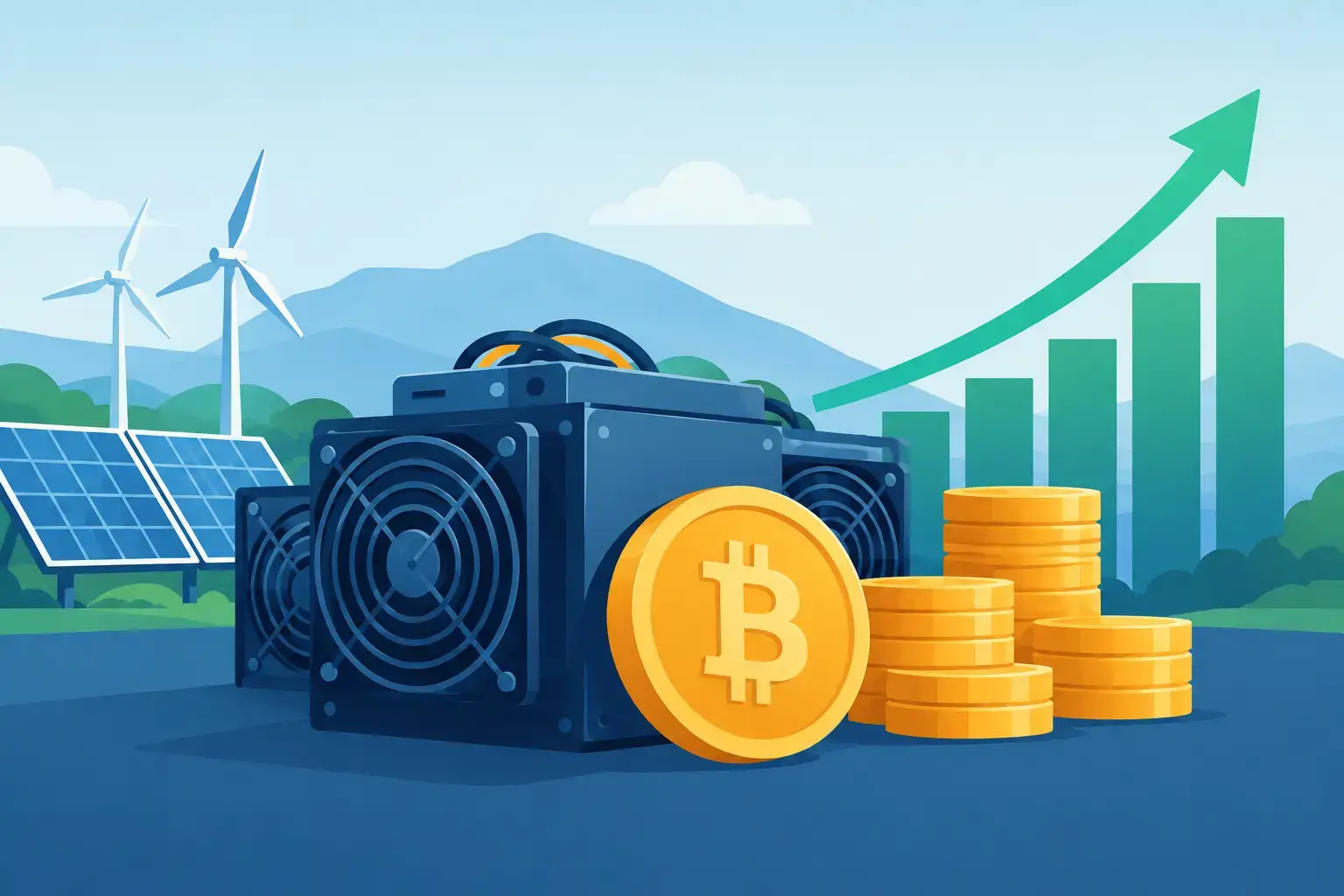
A miner can have an excellent ASIC, a strong Bitcoin price and a promising forecast, then lose the advantage through expensive electricity, heat-related downtime or slow repairs. That is why crypto mining is not simply about buying hardware. It is an infrastructure business built around converting reliable power into hashrate, then keeping that hashrate online at a cost that leaves room for return.
For a first-time buyer, the headline figures can appear straightforward: hashrate, watts, price and projected daily revenue. For an operator running dozens or hundreds of units, the reality is more exacting. Profitability moves with network difficulty, BTC price, transaction fees, curtailment, electricity contracts, cooling performance and the quality of day-to-day operations. The machines matter, but the environment around them matters just as much.
How crypto mining creates value
Bitcoin mining secures the network through proof of work. ASIC miners perform vast numbers of cryptographic calculations in an attempt to find a valid block. When a mining pool finds a block, the reward is shared among participating miners according to the work they contributed.
Your practical output is measured in hashrate, usually terahashes per second (TH/s). Your cost base is driven largely by energy consumption, measured in watts, and the price paid per kilowatt-hour (kWh). The relationship between the two is the first number every miner should understand: efficiency, often expressed as joules per terahash (J/TH).
Lower J/TH means the machine needs less energy to produce each unit of hashrate. It does not automatically make it the right purchase. A highly efficient new-generation unit normally carries a higher Capex cost, while an older model may be cheaper to acquire but more exposed when difficulty rises or energy pricing changes. The right choice depends on your power rate, expected holding period, financing position and appetite for operational risk.
Mining is also probabilistic. A revenue estimate is a scenario, not a guarantee. Network difficulty can increase, pool earnings fluctuate and Bitcoin’s market price can move sharply in either direction. Serious planning uses conservative assumptions and considers the point at which a machine becomes uneconomic to run rather than relying on a single attractive daily-revenue figure.
The operating factors that determine mining returns
Electricity is the largest recurring cost
A miner consuming 3.5 kW runs through 84 kWh in a day if it operates continuously. Multiply that across a fleet and even a small difference in kWh pricing becomes material. The advertised electricity rate is only useful when you know exactly what it includes: energy, infrastructure, management, cooling, taxes, pool fees and any curtailment terms should be clear.
For larger deployments, the question extends beyond tariff. A stable supply arrangement, capacity certainty and a properly structured power purchase agreement can be more valuable than a headline rate that cannot be sustained. This is where Opex discipline starts. Cheap power that is frequently interrupted is not necessarily cheap power.
Uptime is a financial metric
A machine that is off earns nothing while fixed hosting or financing costs may continue. Uptime is therefore more than a technical service promise. It directly affects realised hashrate and the difference between a modelled return and an actual one.
Downtime can come from power events, internet failure, overheated racks, dusty filters, failed fans, damaged hashboards and delayed access to replacement parts. A professional facility reduces these risks with monitoring, physical security, controlled airflow, planned maintenance and technicians who can diagnose faults quickly.
Ask how uptime is measured, what alerts are available to the customer and how repairs are authorised. A dashboard is useful, but it is not a substitute for active operations. The objective is to identify an underperforming miner before a minor fault becomes days of lost production.
Cooling protects both output and equipment life
ASIC miners turn most of their electricity input into heat. In a warm climate or a densely packed facility, that heat becomes an operational constraint quickly. Poor ventilation can lead to thermal throttling, higher fan wear and component stress, even before a full shutdown occurs.
Air cooling remains practical for many installations when the building design, filtration and airflow are right. Hydro-cooling is increasingly attractive for high-density fleets because it can manage heat more consistently, reduce noise and support a more compact deployment. It also requires specialised infrastructure, water-loop management and operators who understand the system. It is not a universal upgrade; it is a decision that should follow the facility design and fleet strategy.
Hardware availability and repair capacity matter
An ASIC purchase is the start of an operating relationship with a physical asset, not the finish line. Before selecting a model, assess warranty coverage, lead times, firmware support, spare-part availability and whether qualified technicians can repair hashboards, control boards and power supplies.
A lower upfront price can be false economy if a failed unit must sit idle for weeks waiting for a part or cross-border servicing. For fleets, keeping a clear inventory of serial numbers, fault history and repair status makes replacement planning far more controlled. Miner-management software adds visibility by showing hashrate, temperature, rejection rates and offline units across the portfolio.
Buy, host or use cloud mining?
There is no single route into mining. The best structure depends on how much control you want, how quickly you need to deploy and whether you have the resources to operate infrastructure yourself.
Buying ASICs and running them at your own site offers direct control, but it also makes you responsible for electrical engineering, ventilation, noise, security, connectivity and maintenance. For a small number of units, domestic operation can appear inexpensive until heat, power limits and practical disruption are accounted for. It is rarely the cleanest path to scaling.
Managed hosting separates ownership of the miners from the daily running of the facility. The customer owns the hardware and receives operational visibility, while the host manages installation, power, cooling, monitoring and on-site support. This is often the most suitable route for investors who want direct exposure to mining economics without building a data centre team.
Cloud mining provides a more hands-off alternative, generally without the responsibility of owning and maintaining individual machines. It can suit buyers who prioritise simplicity, but contract terms deserve close scrutiny. Understand the duration, fees, settlement method, performance basis and what happens if market conditions make the contracted hashrate uneconomic.
For larger operators, a dedicated deployment or turnkey data centre can offer the greatest control over fleet design and long-term unit economics. It also brings the highest Capex, longer planning cycles and more operational responsibility. The economics improve with scale only when power, cooling and maintenance processes are designed correctly from the beginning.
Questions to ask before committing capital
A credible mining proposal should withstand detailed questions. Start with the all-in cost of operation rather than the equipment price alone. Ask for the specific ASIC model, nominal hashrate, efficiency rating, expected delivery window, hosting rate, included services and maintenance process.
Then test the operating assumptions. What happens when network difficulty rises? Can you move or sell the hardware if your strategy changes? Is there a minimum contract term? How is curtailment handled? What data will you receive on machine performance and pool payouts? If a miner fails, who approves the repair and how quickly can it return to service?
For UAE-based and global investors, location can add real value where it provides access to dependable facilities, responsive support and clear operational accountability. It should not be used as a substitute for due diligence. Compare the complete service model: procurement, logistics, installation, power, security, monitoring, repair and reporting should work as one accountable system.
Build for the conditions, not the brochure
The strongest mining decisions begin with a target: income, long-term Bitcoin accumulation, fleet expansion or a defined return horizon. From there, select hardware and hosting that match your energy cost, risk tolerance and expected scale. A low-cost older miner may fit a short-term opportunity with very cheap power; a high-efficiency fleet may be more appropriate where resilience through changing market conditions is the priority.
The same principle applies to partners. BitHash supports miners across the full operational chain, from ASIC sourcing and deployment to managed hosting, maintenance and larger infrastructure projects. The practical value is not merely having machines online quickly. It is having a clear route to action when conditions, hardware or capacity requirements change.
Crypto mining rewards disciplined operators rather than optimistic spreadsheets. Choose transparent power terms, proven cooling, visible performance data and support that can keep machines producing when the market becomes less forgiving. That is how hashrate becomes a managed asset rather than a collection of expensive boxes.
BitHash Editorial
Verified AnalystBitHash Infrastructure, UAE Colocation & Mining Intelligence Team