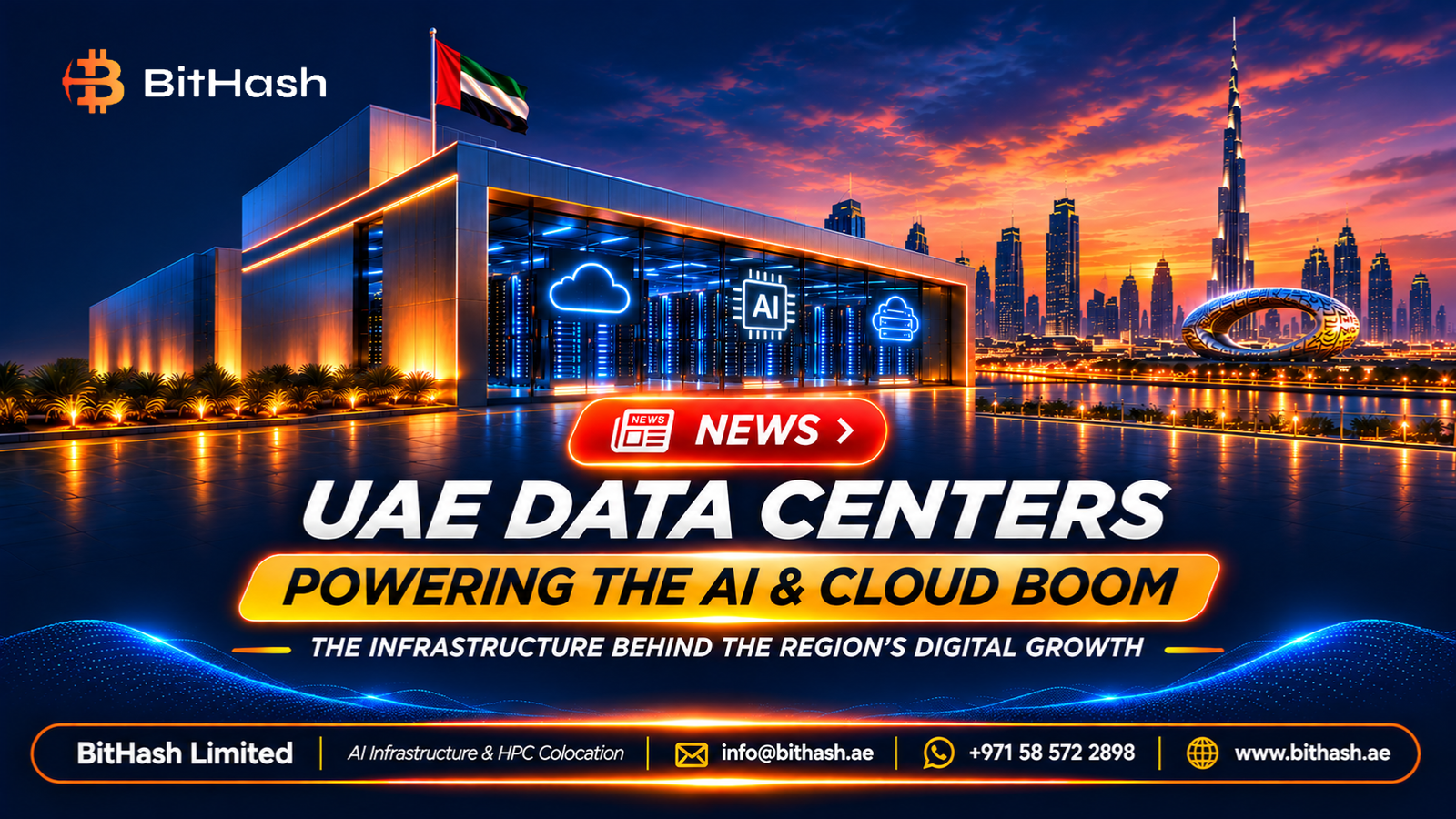
The UAE is becoming one of the Middle East’s important destinations for digital infrastructure. Demand for intelligence, cloud services and secure data storage is growing and this growth is pulling major technology companies and investors into the UAE. UAE Data Centers are playing a role in growth, giving UAE businesses access to computing power that is closer to UAE customers, while also supporting the regions wider digital ambitions. Abu Dhabi and Dubai are leading the expansion of UAE data center facilities. Knight Frank reported that the UAE had than 376 megawatt of live data center capacity in 2025 and the vacancy rate was only 2.4 percent. Low vacancy shows how quickly UAE demand is absorbing existing capacity.
How UAE Data Centers Are Supporting AI Growth
AI applications need powerful processors, reliable electricity, and facilities that can handle high computing loads. This is creating new demand for AI Data Centers across the country. Microsoft and G42 announced a further 200 MW of data center capacity through Khazna, with the expansion expected to start coming online before the end of 2026. Meanwhile, the Stargate UAE project is planned as a major AI computing development. Its first 200 MW phase is expected to come online during 2026, although the wider project remains subject to changes in security and infrastructure planning. These investments show why global technology companies see the UAE as an important location for AI services.
Why Data Center Colocation Is Driving the Market
Some cloud providers do not want to build and run their sites. Renting space from a company that does this can cut the money you spend at the start. It also helps firms get services to users sooner. This is why Data Center Colocation in the UAE holds such a spot. Research from DC Byte, reported by Data Center Knowledge, puts colocation at 95% of the countrys total data center capacity. Over 85% of IT power also runs through colocation sites.
Key reasons behind this demand include:
- Faster access to operational data center space
- Flexible capacity for growing AI and cloud workloads
- Local hosting for businesses with data residency requirements
- Access to established power and network infrastructure
UAE Data Centers and the Demand for Sovereign Cloud
Government agencies, banks, healthcare providers and other regulated businesses often need control over where their information is stored. This is driving growing interest in Sovereign Cloud services. In May 2026, du Techs National Hypercloud received certification from the UAE Cyber Security Council for public and private sector deployment. The certification supports data residency and security requirements. Developments like this give organizations choices for using cloud services while keeping their data within the country.
Power, Cooling, and Sustainability Challenges
Rapid expansion also brings problems. Wood Mackenzie says that UAE data centers used 3 TWh of electricity in 2025, with demand expected to grow beyond 6 TWh by 2030. High temperatures add stress because facilities need good cooling to protect sensitive equipment. Operators must plan carefully for electricity supply, backup systems, cooling efficiency and renewable energy access. Security and physical resilience have also become more important for AI facilities.
What the UAE Data Center Market Could Look Like
An ALEC Holdings presentation published in November 2026, citing S&P Global Ratings and 451 Research, forecasts UAE IT power capacity rising from 0.91 GW in 2025 to 2.14 GW by 2030.
| Year | Forecast UAE IT power capacity |
| 2025 | 0.91 GW |
| 2026 | 1.08 GW |
| 2027 | 1.46 GW |
| 2028 | 1.68 GW |
| 2029 | 1.94 GW |
| 2030 | 2.14 GW |
These are forecasts, not confirmed operational capacity.
The Road Ahead for UAE Data Centers
The UAE’s digital growth is creating opportunities for operators, cloud providers, and businesses investing in AI Infrastructure. Continued investment in colocation, sovereign cloud, power systems and secure facilities will influence how quickly the market can grow. The opportunity is significant, but long-term success will depend on more than adding capacity. Providers must deliver reliable services, manage energy demand, and meet the needs of customers running increasingly demanding workloads.
BitHash Media Relations
Dubai Corporate Press OfficeFor press kits, executive interviews, or verification: info@bithash.ae