
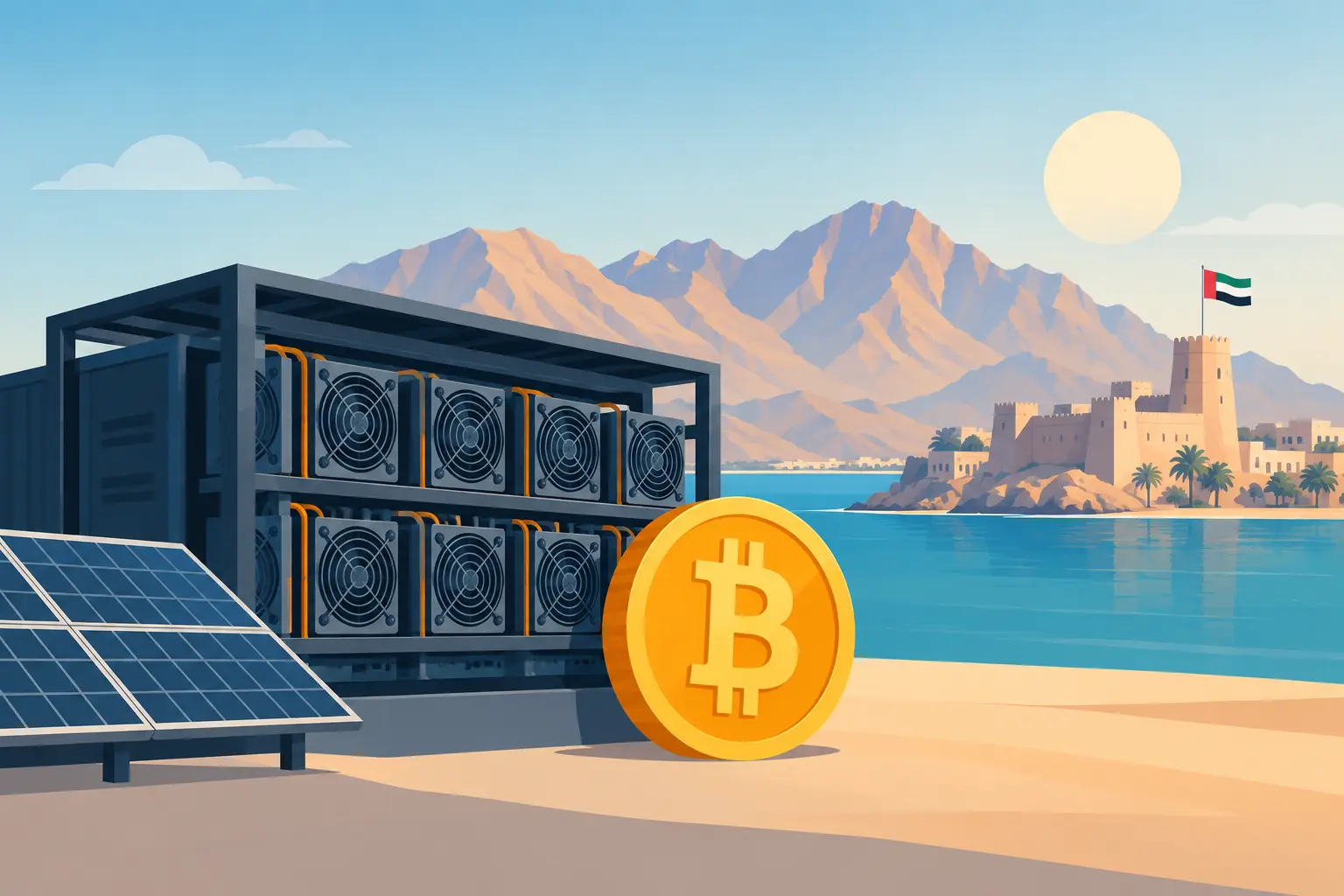
A miner can look profitable on a spreadsheet and still underperform badly once it reaches site. For investors considering bitcoin mining Ras Al Khaimah, the opportunity is not simply about buying a high-hashrate ASIC at the right price. It is about turning that machine into productive uptime through the right power arrangement, cooling design, security, monitoring and technical response.
Ras Al Khaimah has a growing industrial profile, proximity to the wider UAE digital-asset economy and potential for purpose-built infrastructure. Those strengths matter. But Bitcoin mining is unforgiving of assumptions: a few percentage points of avoidable downtime, poorly managed heat or unclear electricity charges can materially change monthly returns.
The practical question is not whether mining can operate in Ras Al Khaimah. It can. The question is whether your selected facility, commercial terms and operating model give your fleet the conditions to run consistently and scale without operational friction.
What Makes Bitcoin Mining in Ras Al Khaimah Different?
Bitcoin miners convert electricity into hashrate. The business case therefore rests on a small number of variables: ASIC efficiency, Bitcoin price, network difficulty, pool performance, electricity cost, uptime and operating expenditure. Location influences several of them at once.
Ras Al Khaimah can be attractive for operators that need industrial space and a UAE-based operating presence without placing every machine in a high-cost urban environment. It may suit a privately developed mining site, a containerised deployment or a managed hosting arrangement, depending on fleet size and available infrastructure. For an investor with several units, a specialist host is often more efficient than building a site from scratch. For a fleet of 150 machines or more, dedicated infrastructure can become a serious option – but only after detailed electrical and thermal due diligence.
The climate is central to that calculation. ASICs generate substantial heat around the clock. High ambient temperatures increase the burden on ventilation and air cooling, particularly during hotter periods. A facility designed around nominal rather than peak conditions risks throttling, higher fan consumption, component stress and forced curtailment when production matters most.
That does not make the region unsuitable. It makes engineering non-negotiable. The right design may include properly sized extraction, filtered air paths, hot- and cold-aisle separation, redundant fans, intelligent environmental controls or hydro-cooling for high-density fleets. Each option has a different Capex and Opex profile.
Power Pricing Is Only Part of the Mining Equation
Electricity is normally the largest running cost in a mining operation, yet a headline kWh rate does not tell the full story. Before committing capital, establish exactly what the rate includes and how it is measured. Ask whether it covers electricity at the miner, transformer and distribution losses, cooling load, service fees, VAT where applicable, metering and any demand-related charges.
A transparent hosting agreement should also make the commercial mechanics clear. That means billing frequency, payment currency, deposit requirements, minimum term, curtailment rights, overage treatment and the process if electricity pricing changes. A cheap quote with vague conditions can be more expensive than a clear rate that accurately reflects the total cost of operation.
The other side of power economics is efficiency. A newer ASIC with lower joules per terahash may earn more net Bitcoin from the same power allocation than an older machine, even if its purchase price is higher. This is why hardware selection should be based on projected operating profit rather than the lowest unit price.
For example, an operator comparing air-cooled and hydro-cooled miners should model more than hashrate. Hydro-cooled units can support dense deployments and controlled thermal performance, but they need compatible infrastructure, liquid loops, monitoring and competent maintenance. The better choice depends on power capacity, site design, budget and how quickly the fleet needs to expand.
Build for Heat, Dust and Continuous Operation
Mining hardware is not office IT equipment. It is industrial equipment operating at high load, often for years. A Ras Al Khaimah operation should be assessed for heat management, airborne dust, humidity, power quality and physical access before machines are installed.
Air-cooled mining can be effective when the building layout and airflow are engineered correctly. Fresh intake air needs filtration appropriate to local conditions, while hot exhaust must leave the space without recirculating into the intake. Racks, containers and cable routes should support safe service access rather than packing machines tightly for the sake of a higher unit count.
Hydro-cooling can offer a more controlled route for higher-density deployments. It reduces reliance on individual miner fans and can improve acoustic performance, while enabling a compact, professional data-centre layout. It also introduces pumps, heat exchangers, liquid quality management and additional points of failure. It is a performance tool, not a shortcut.
The operational standard should be simple: every miner must be visible, measurable and serviceable. A strong site monitors hashrate, board temperatures, pool connectivity, power draw, fan or pump behaviour and online status in real time. When performance drops, the goal is to identify whether the issue is the machine, network, power circuit, cooling system or pool configuration before lost production compounds.
Choose the Right Operating Model
There are three broad ways to approach a mining deployment in Ras Al Khaimah. Buying hardware and hosting it with an experienced operator offers the lowest operational burden for most investors. You retain ownership of the machines while the hosting provider handles installation, power distribution, network connectivity, monitoring, security and day-to-day support.
A dedicated hosted area offers greater control for larger fleets. This can include a defined power allocation, tailored rack layout, private network configuration and agreed service levels. It suits professional operators who want a clear expansion path without taking on the full burden of land, construction and facility management.
Building a proprietary site provides maximum control but requires the deepest expertise and capital commitment. The project must account for utility coordination, transformer capacity, switchgear, fire safety, cooling, civil works, network resilience, spares, staffing, security and commissioning. It can be commercially sensible at scale, but only when the power and utilisation plan are secure.
Before choosing, assess four practical factors:
- fleet size today and the realistic number of machines planned over the next 12 months;
- the expected holding period for the ASICs and your tolerance for hardware refresh cycles;
- the total delivered cost of power, cooling and operations, not just the advertised tariff;
- how much technical responsibility your team can genuinely absorb without affecting uptime.
For a first-time miner, fully managed hosting often protects time and reduces avoidable errors. For a sophisticated operator, the value may lie in custom power capacity, granular reporting and the ability to deploy batches of machines quickly.
Due Diligence Before You Send Payment
The fastest deployment is only valuable if the site is ready. Confirm that the provider has actual available capacity, not merely planned capacity. Request clarity on commissioning timelines, the exact ASIC models supported, power density limits, monitoring access, security controls and the repair process.
Repair capability deserves close attention. Hashboards, control boards, power supply units and cooling components can fail. Sending equipment away for diagnosis can leave capital idle for weeks. A provider with qualified technical support, spare-part access and a defined repair workflow can materially reduce downtime. The key metric is not a promise of support but the process from fault alert to machine return.
Security also goes beyond guards and cameras. A professional operation should control site access, maintain asset records, document serial numbers, separate client inventory and protect remote management credentials. If you cannot clearly see where your machines are, what they are producing and how faults are handled, you do not have enough operational visibility.
The Better Way to Measure Returns
Daily revenue screenshots are useful, but they are not an investment model. Measure results against net Bitcoin mined after pool fees, electricity, hosting charges, repair costs and downtime. Track hashrate against manufacturer specifications, then investigate persistent gaps rather than accepting them as normal.
Mining economics will move with Bitcoin price, network difficulty, transaction-fee conditions and hardware market prices. No provider can remove that market risk. What professional infrastructure can do is reduce the operational waste around it: delayed deployment, unstable power, preventable overheating, poor reporting and slow maintenance.
For miners seeking a UAE-based partner, BitHash combines ASIC sourcing, managed hosting, repair support and infrastructure expertise so equipment can move from purchase to active operation without a fragmented chain of suppliers. The right arrangement should give you a clear view of costs, machine status and next steps from day one.
Ras Al Khaimah can support a credible mining strategy when the operation is designed around real power capacity, thermal management and accountable service. Start with the economics, verify the facility, and choose an operating model that lets your machines spend more time hashing than waiting for attention.