A WhatsMiner is only profitable when it is hashing. That sounds obvious, but many mining returns are lost long before a machine reaches the pool: delayed procurement, unsuitable power arrangements, poor airflow, slow repairs and a lack of visibility once the units are switched on. For miners assessing WhatsMiner UAE options, the real decision is not simply which ASIC to buy. It is how that ASIC will be deployed, powered, monitored and maintained over its working life.
WhatsMiner equipment has earned a strong position in serious Bitcoin mining operations because it is built for sustained, high-output work. The right model can deliver substantial hashrate, but hardware performance on paper is only one part of the commercial equation. Electricity pricing, uptime, pool configuration, cooling design and response times all influence the return generated by each machine.
Why WhatsMiner UAE demand is growing
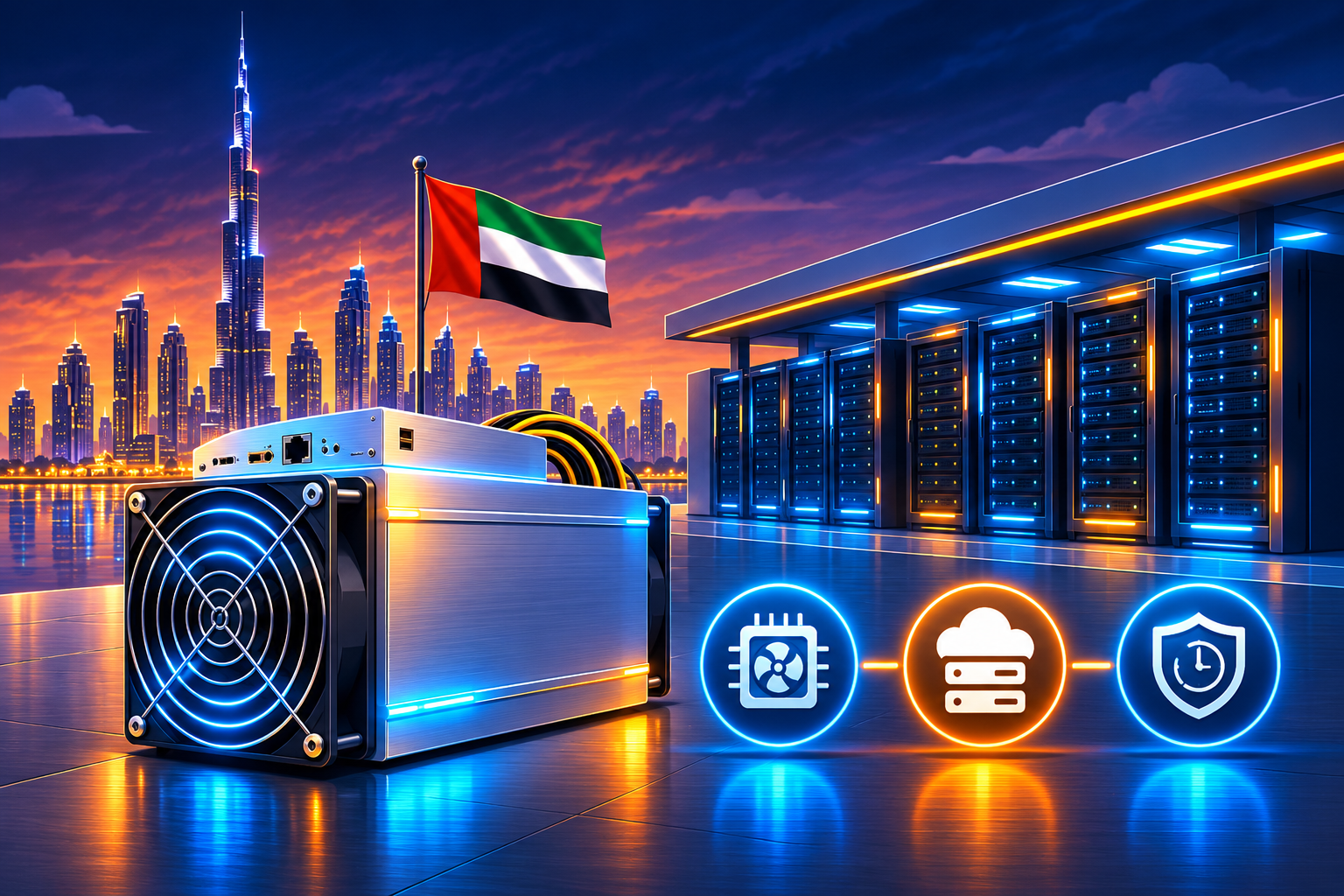
The UAE has become a relevant base for miners who want professional infrastructure without managing every operational detail themselves. Its location, business environment and expanding appetite for digital-asset infrastructure make it attractive for investors seeking a more organised route into ASIC mining.
For a first-time buyer, the appeal is straightforward: acquire a machine, place it in a managed facility and monitor performance without turning a home, warehouse or office into a high-heat, high-noise mining site. For fleet operators, the value is different. They need dependable capacity, clear power terms, physical security and the ability to add machines without rebuilding their operating model each time.
That does not mean every WhatsMiner deployment should be hosted in the same place or under the same commercial structure. A small portfolio may prioritise simplicity and fixed operational support. A fleet of 150 or more units may require dedicated racks, negotiated electricity arrangements, detailed reporting and an expansion plan. The correct solution depends on scale, risk appetite and how actively the owner wants to manage daily mining operations.
Choosing the right WhatsMiner for your mining plan
WhatsMiner models vary by hashrate, power draw, cooling method and purchase price. Selecting purely on the headline hashrate can be a costly mistake. A high-output machine may produce more BTC, but its efficiency and operating requirements need to fit the available power rate and facility design.
The most useful starting point is efficiency, usually measured in joules per terahash. Lower J/TH means the machine requires less energy to produce each unit of hashrate. When power represents the largest ongoing operating cost, efficiency can matter more than a modest difference in upfront Capex.
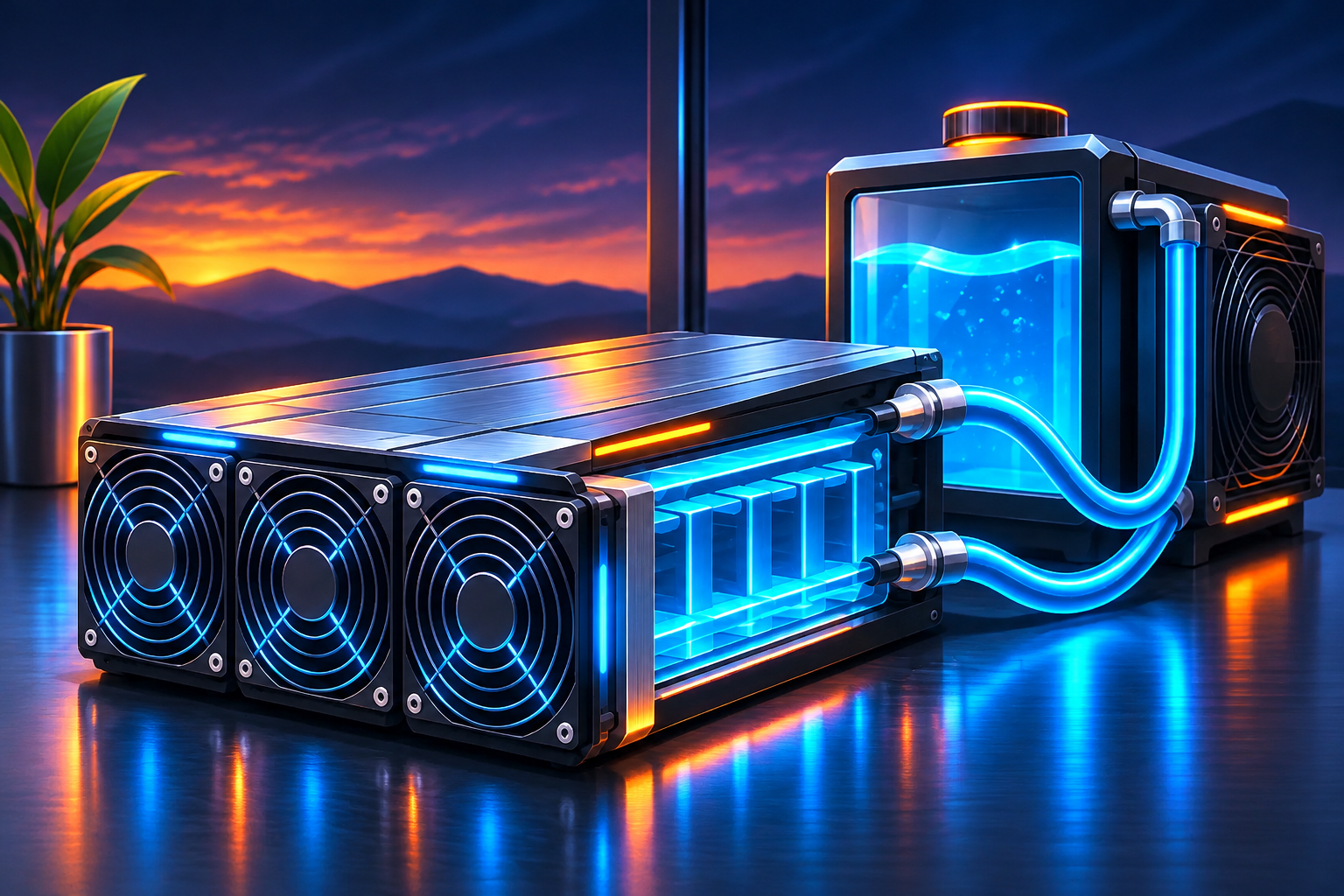
Air-cooled or hydro-cooled?
Air-cooled WhatsMiner units are familiar, widely deployable and well suited to standard mining facilities with correctly designed ventilation and filtration. They can be the practical choice for smaller allocations or operators who need flexibility across sites.
Hydro-cooled units are designed for higher-density environments. With liquid cooling, facilities can manage heat more effectively, reduce some noise concerns and potentially operate more hardware in a tighter footprint. However, hydro hosting requires compatible infrastructure, skilled maintenance and careful water-system management. It is not automatically the better choice for every miner, particularly where fleet size does not justify the additional infrastructure cost.
A sensible procurement discussion should cover the ASIC model, expected power consumption, the intended hosting environment and the projected operating period. Mining economics move with Bitcoin price, network difficulty, transaction-fee conditions and the block subsidy. No machine should be presented as a guaranteed return.
Hosting matters as much as the machine
Buying an ASIC is the beginning of the project, not the end. A WhatsMiner needs stable power, network connectivity, cooling, security and regular technical attention. When any of these fails, the miner stops producing.
Managed hosting transfers that operational burden to a specialist team. Instead of coordinating electricians, ventilation contractors, site access and repair logistics, the owner receives an active mining deployment with visibility into hashrate and machine status. This is particularly valuable for investors who understand the financial side of mining but do not want to build an in-house operations department.
The quality of a hosting package should be judged by more than a headline kWh rate. Ask how electricity is structured, whether there are additional management or service charges, how uptime is measured, what happens when a unit goes offline and how quickly faults are investigated. Transparency is essential because a low advertised rate can lose its appeal if downtime, unclear fees or slow support erode the result.
A properly managed facility also provides physical protection. ASIC miners are valuable, portable assets, and security controls matter. Around-the-clock monitoring, controlled access and documented asset management give owners confidence that their machines are where they should be and operating as expected.
Deployment speed has a direct commercial impact
A miner awaiting installation is capital sitting idle. This is why the gap between payment, delivery, installation and pool connection deserves close attention. Fast deployment allows the owner to begin accumulating hashrate sooner, while prolonged delays expose the investment to changing market conditions without any production.
At BitHash, qualifying mining hardware and hosting deployments can go live within 24 hours of payment confirmation, subject to machine availability and the agreed facility capacity. That speed only works when procurement, logistics, installation and monitoring are coordinated by one accountable infrastructure partner.
For larger orders, deployment should be planned in stages. A phased rollout makes it easier to validate performance, confirm power allocation and establish reporting before the full fleet is energised. It also reduces the risk of purchasing equipment faster than the selected site can support it.
Monitoring and maintenance protect hashrate
A WhatsMiner fleet does not need constant manual intervention, but it does need active oversight. Temperature alerts, hashboard errors, fan issues, unstable power supply units and network interruptions can all reduce output. Left unresolved, a minor fault can become a longer outage or more expensive repair.
Miner-management software provides the operational view owners need: online and offline status, hashrate, temperature readings, pool connectivity and alert history. For a handful of miners, that visibility offers reassurance. For an industrial fleet, it is a control layer that helps operations teams identify patterns and prioritise interventions.
Maintenance should also be preventative. Dust accumulation, airflow restrictions and deteriorating components can affect thermal performance over time. In air-cooled environments, cleaning schedules and ventilation discipline are particularly important. In hydro-cooled facilities, operators need to monitor liquid flow, connections and system integrity alongside the ASICs themselves.
When repairs are required, response time matters. The practical questions are whether diagnostics are available on site, whether replacement parts can be sourced quickly and whether the owner receives clear reporting on the issue, cost and expected return-to-service date. A machine in repair generates no hashrate, so repair capability is part of the hosting proposition, not an optional extra.
Calculating WhatsMiner economics realistically
Before purchasing, model the full operating picture rather than focusing on estimated daily revenue. Start with hashrate and expected energy consumption, then apply the actual electricity cost, hosting fees, pool fees and a reasonable allowance for downtime and maintenance. Include the purchase price, shipping or deployment costs, and the potential resale value of the equipment.
It is also wise to test several scenarios. What happens if network difficulty rises? What if the Bitcoin price falls or rises sharply? How does a different electricity rate change the payback period? Mining can produce attractive results, but it remains an operational business with variable revenue. Conservative assumptions are more useful than optimistic projections.
For serious investors, separating Capex from Opex clarifies the decision. Capex includes the ASIC and any dedicated infrastructure. Opex includes electricity, hosting, maintenance, pool fees and operational management. A lower machine price can be less attractive over time if it creates higher energy costs or maintenance exposure.
Build a mining position that can scale
The best WhatsMiner UAE strategy is usually one that leaves room to grow without forcing growth. Start with a deployment size that matches your capital plan and risk tolerance, then use real performance data to decide whether to add capacity. This approach is often stronger than committing all available capital to hardware before the hosting relationship and operational reporting have been tested.
For small miners, the priority is a clear plug-and-mine route with support when questions arise. For professional operators, it is a repeatable model: known equipment specifications, transparent power arrangements, reliable monitoring and a facility capable of taking the next batch without operational disruption.
A WhatsMiner can be a powerful income-producing asset, but only when the infrastructure around it is treated with the same seriousness as the hardware itself. Choose the machine for its efficiency, choose the site for its operating discipline, and keep every decision tied to measurable uptime and long-term economics.
BitHash
Verified AnalystBitHash Infrastructure, UAE Colocation & Mining Intelligence Team